


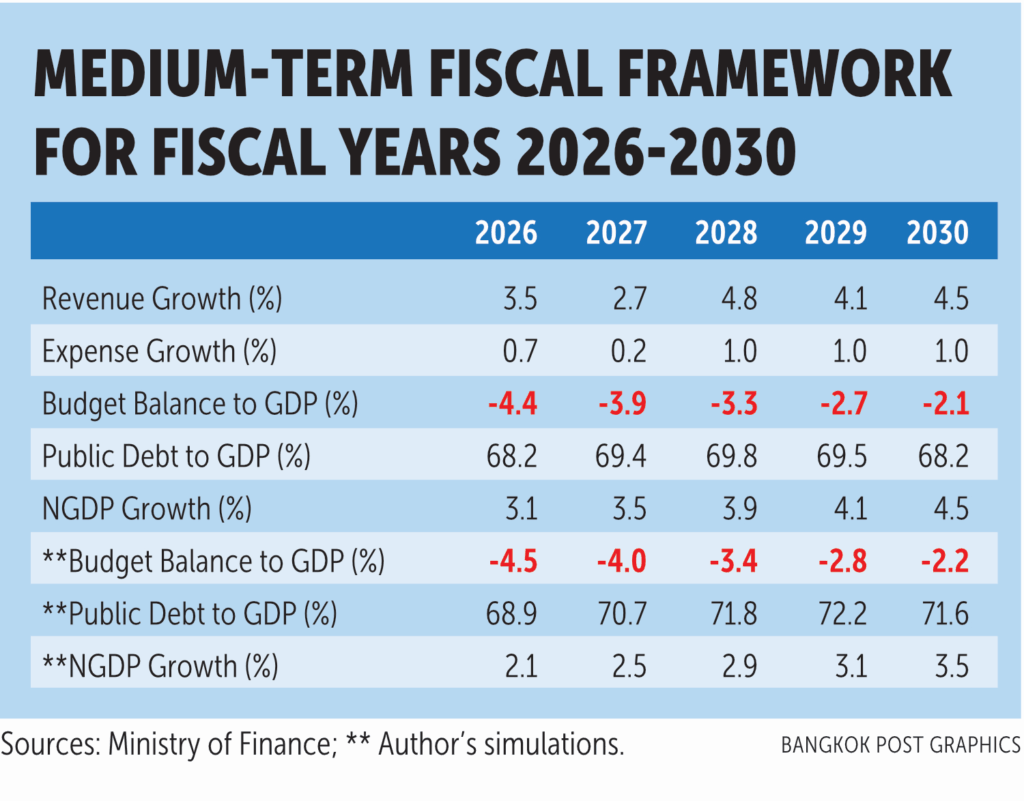
This article does not criticize Finance Minister Ekniti Nitithanprapas’s Medium-Term Fiscal Framework (MTFF) for FY2026-FY2030 but highlights Thailand’s fragile fiscal position, which requires multiple revenue measures. Although the MTFF includes VAT hikes of 1.5% in FY2028 and FY2030, these alone are unlikely to reduce the deficit below 3% of GDP, necessitating additional taxes, possibly a petrol tax hike of 2 baht per litre in FY2029.
The government should clarify the projected 4.1% revenue increase in FY2029, as it seems high. Historically, the previous MTFF for FY2024-FY2028 aimed to reduce deficits without tax hikes, thanks to strong growth.
Despite hopes for Ekniti’s plan to correct fiscal imbalance by curbing unnecessary spending, the budget shows a 1% annual increase, indicating reliance on tax hikes, including VAT and gasoline taxes. The MTFF overlooks the over-expenditure from COVID-19 stimulus efforts—especially the FY2020 emergency spending—which inflated budgets and should not be the baseline for future plans.
Credit: Bangkok Post
The Thai economy’s slow recovery from COVID-19 has led to sustained high government spending. Public debt rose from 41% of GDP in FY2019 to 61% in FY2022 due to support measures, and was temporarily lifted from 60% to 70% to accommodate borrowing. Unlike Vietnam, which quickly recovered, Thailand relied on continued support, including the 2024 cash handout scheme that pushed debt to 64%.
The Bhumjaithai government has maintained a spend-and-borrow approach, with debt expected to reach 68.2% of GDP in FY2026. Instead of increasing revenue, a prudent MTFF would focus on expense reduction—cutting pre-COVID stimulus spending, personnel costs (which now account for 42% of the budget), and correcting overly optimistic GDP growth assumptions. Lowering the growth forecast by just 1% shows the debt ceiling could be breached by FY2027.
While Minister Ekniti is dedicated, his MTFF appears to overlook IMF recommendations for targeted fiscal policies and reforms, instead relying on continued spending and borrowing. To sustainably improve Thailand’s fiscal health, spending must be curbed and structural reforms prioritized.