

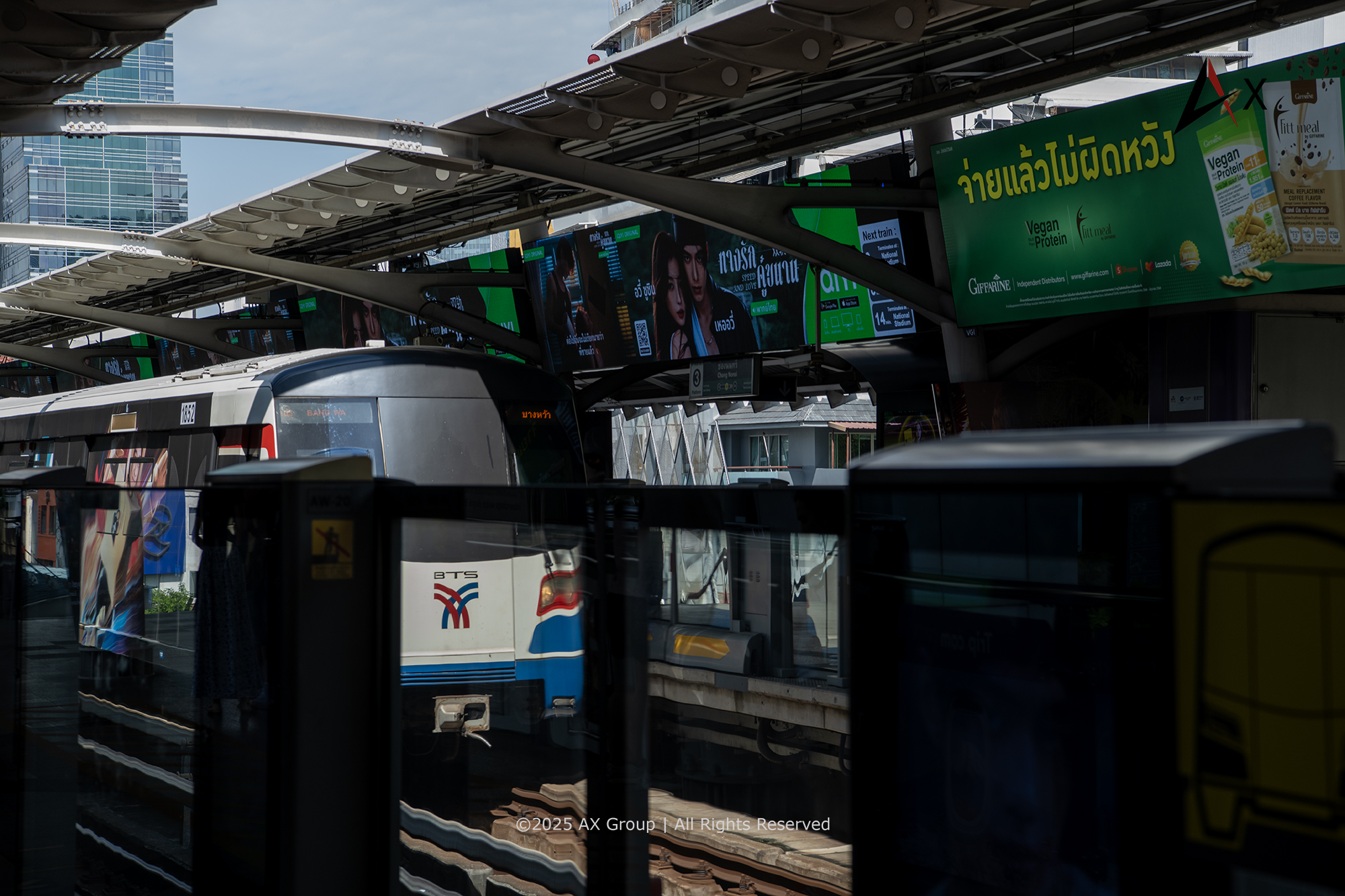
Bangkok city officials are preparing to review the future of the skytrain system as the current 30-year concession approaches expiration in four years.
The Traffic and Transportation Department expects to finalize a study next month and will submit its recommendations to the Bangkok Metropolitan Administration (BMA), an official announced at a forum on Tuesday.
The upcoming report will gather input from all stakeholders concerning the future contract of the mass transit line, explained Sitthiporn Somkitsan, the department’s director-general.
Currently, the concession covers only the segments between National Stadium and Saphan Taksin stations on the Silom Line, as well as between Mor Chit and Onnut on the Sukhumvit Line. Bangkok Mass Transit System Co (BTSC) operates these sections and is likely to seek a new 30-year concession, extending its operation until 2059.
However, competition may be on the horizon. Interested parties reportedly include construction firms Ch. Karnchang and Sino-Thai Engineering and Construction, Gulf Energy Development Plc, and the operator of the Don Muang Tollway, all of whom sent representatives to the discussion.
The BTS system currently provides about 850,000 passenger trips daily, with projections to increase to 1.55 million once additional train carriages are added, making each train six cars long.
A BTSC source indicated that the company has a notable advantage in the upcoming bidding process due to its relatively lower investment costs for renewal.
Adul Kaewdee, spokesperson for the Association of Siamese Architects, noted that the BTS’s future also depends heavily on national government policies. There’s a possibility that ownership of the line might shift from the BMA to the Mass Rapid Transit Authority of Thailand, especially if a nationwide flat-rate fare policy—such as the previously proposed 20-baht fare—becomes government policy.
Deciding on the future concession of the skytrain requires approval from the cabinet, marking the final step in the bureaucratic process.