

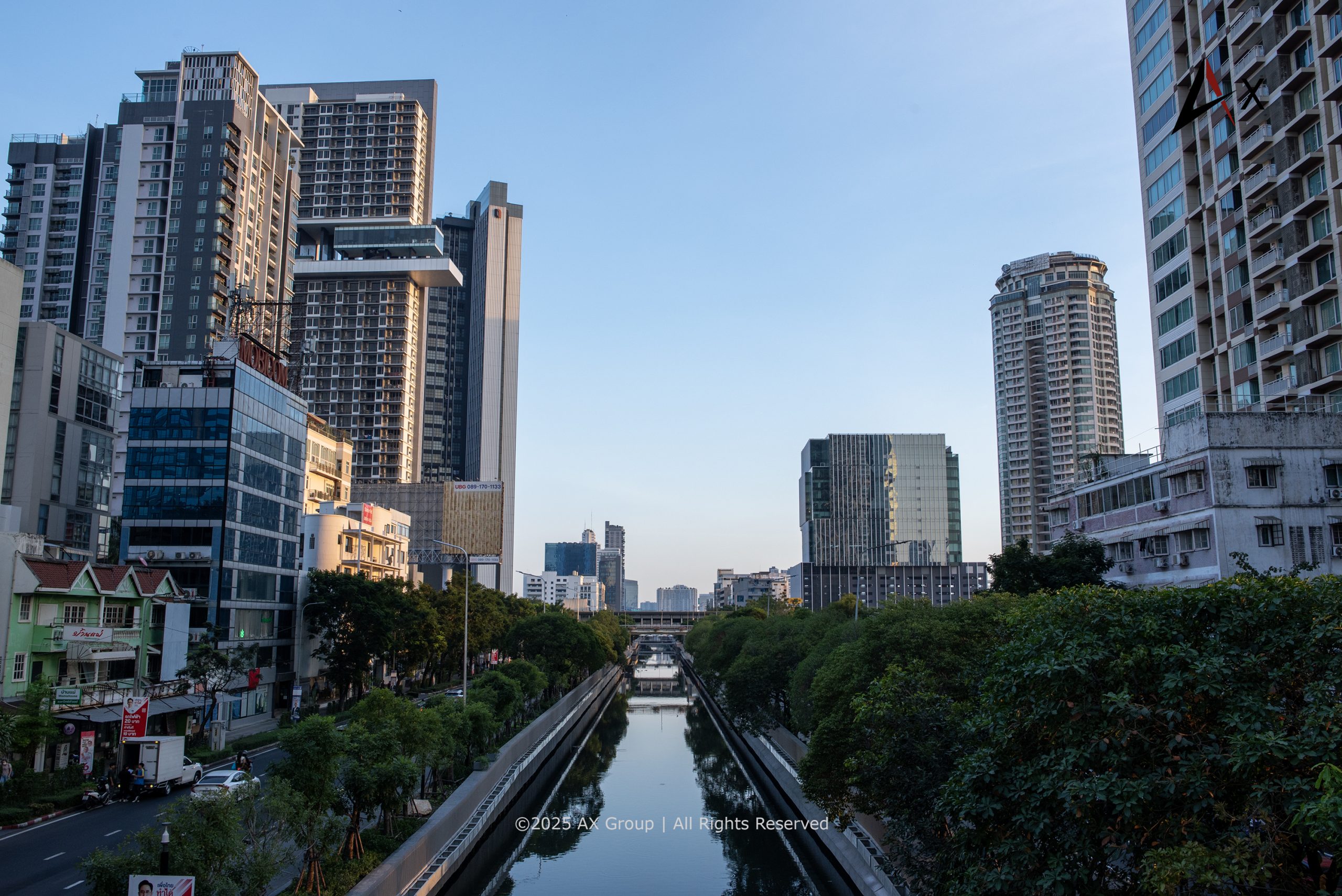
Thailand’s property market could see increased demand for condominiums and rental homes as people relocate from countries affected by the Middle East conflict, according to Colliers Thailand.
Research director Phattarachai Taweewong said destinations such as Bangkok, Phuket, Pattaya, Koh Samui and Chiang Mai are well positioned due to their affordable living costs, strong infrastructure, quality healthcare and established expatriate communities.
Initial demand is expected to come from long-term rentals, as relocating individuals typically rent before making purchase decisions. If instability persists, this could evolve into property purchases, particularly among high-net-worth buyers seeking long-term residence or asset diversification.
Luxury and resort segments are likely to benefit most, while increased foreign residency could also boost demand for offices, international schools and healthcare services.
However, the scale of growth will depend on government policies, including visa schemes, investment incentives and foreign ownership regulations. Clear and supportive measures could strengthen Thailand’s position as a relocation destination and drive medium- to long-term market growth.
Credit: Bangkok Post
Foreign Demand Rebalances
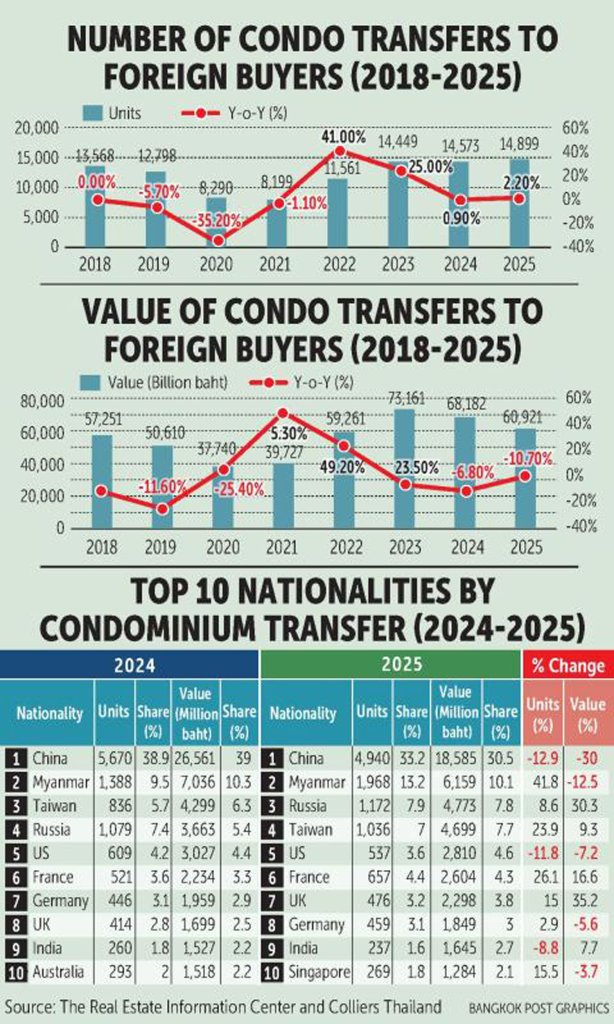
Data from the Real Estate Information Center shows foreign condo purchases in Thailand remained steady at around 13,000 units annually in 2018–19 before dropping 35% in 2020 due to Covid-19. The market stayed weak in 2021, then rebounded strongly in 2022 and recovered to near pre-pandemic levels by 2023. Growth slowed to under 3% in 2024–25, signalling stabilisation.
Phattarachai Taweewong noted the market has shown resilience, maintaining strong foreign interest despite global challenges.
In value terms, transfers reached 60.9 billion baht in 2025, down 10.7% year-on-year, reflecting weaker purchasing power amid economic uncertainty, high interest rates and currency volatility. A shift towards mid-priced and smaller units also contributed to the decline in total value.
China remained the largest buyer group but saw declines in both volume (-12.9%) and value (-30%), reducing its market share. Meanwhile, demand diversified, with growth from Myanmar, Russia, Taiwan and the UK—Russia notably posting over 30% growth in transfer value.
Overall, 2025 marked a shift away from heavy reliance on Chinese buyers toward a more diversified and resilient foreign demand base in Thailand’s property market.