

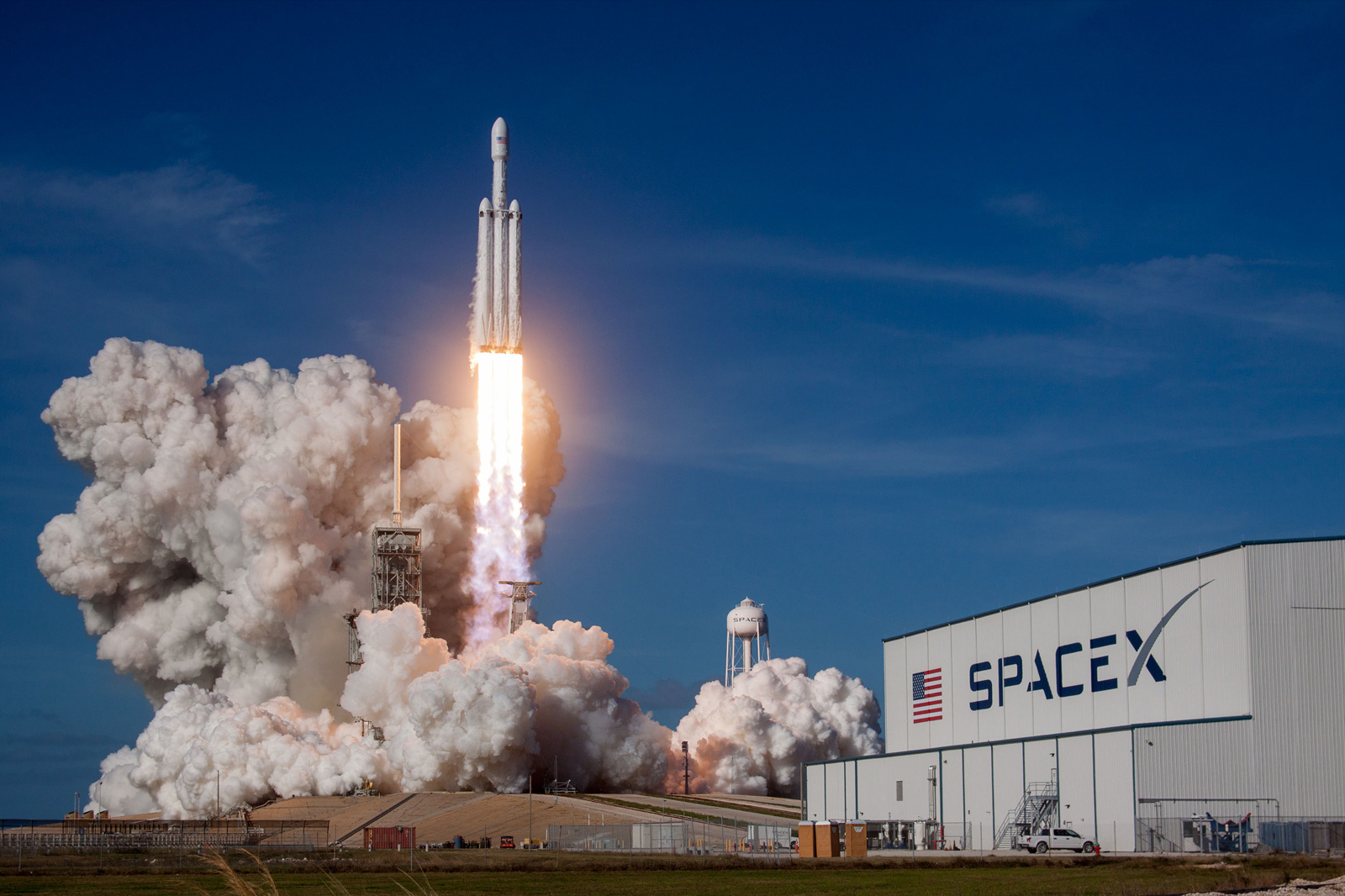
Elon Musk moved closer to making Wall Street history on Wednesday as SpaceX filed for what could become the largest IPO ever, reportedly aiming to raise up to $75 billion with a potential valuation of $1.75 trillion.
If successful, the listing would surpass every previous IPO on record and further solidify Musk’s status as one of the most influential entrepreneurs of his generation. The filing confirmed Musk will continue serving as CEO, CTO, and Chairman following the public debut.
The newly released S-1 filing — the first detailed financial disclosure in SpaceX’s 24-year history — revealed the company generated $18.7 billion in revenue in 2025 while recording a $2.6 billion operating loss, driven largely by heavy investment in next-generation rockets and artificial intelligence.
Starlink emerged as the company’s financial powerhouse, generating $11.4 billion in revenue last year, a nearly 50% increase year-on-year.
Meanwhile, Musk’s AI-related businesses, including xAI and X, generated $3.2 billion in revenue but posted a $6.4 billion operating loss amid aggressive AI infrastructure expansion.
SpaceX also disclosed a major agreement with AI firm Anthropic, leasing spare data centre capacity for $1.25 billion per month through 2029.
The filing arrives shortly after Musk faced legal setbacks in his ongoing rivalry with OpenAI, adding further attention to what could become a landmark year for AI and tech IPOs.
The company confirmed a dual-class share structure that will leave Musk firmly in control after listing, giving him approximately 85% voting power while holding around 42% equity ownership.
SpaceX also unveiled ambitious long-term plans to build AI-powered data centres in orbit, targeting deployment of AI computer satellites by 2028 and eventually placing 100 gigawatts of compute capacity into space annually — a project requiring thousands of rocket launches each year.
According to reports, SpaceX is targeting a June Nasdaq debut under the ticker symbol “SPCX,” with Wedbush analyst Dan Ives suggesting the company could eventually merge with Tesla to create what he described as an AI-driven “holy grail.”