

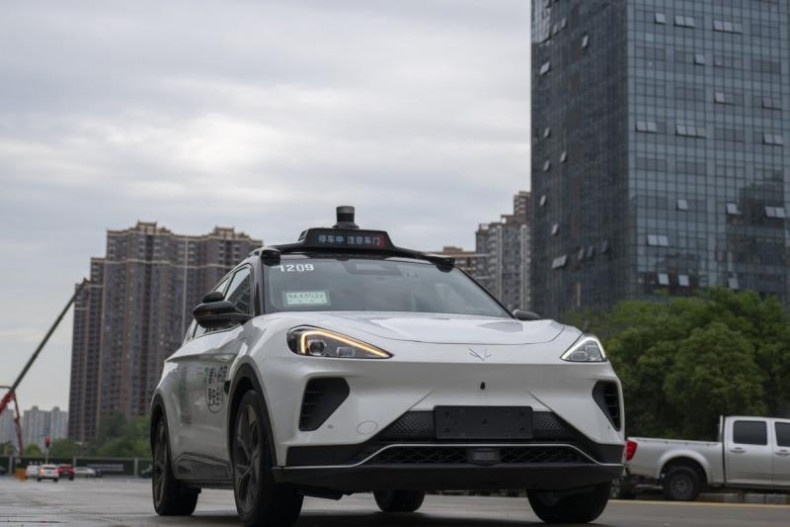
Photo Credit: Xinhua via South China Morning Post
By 2030, China is expected to have approximately 300,000 driverless taxis operating across its four major cities, driven by advances in artificial intelligence (AI) and a highly competitive electric vehicle (EV) industry, according to UBS.
The number of robotaxis nationwide is projected to grow to 4 million by the late 2030s, as more Chinese consumers become open to adopting new technologies, stated Paul Gong, head of China automotive research at UBS.
“Rapid technological progress and rising labor costs make autonomous vehicles increasingly valuable for boosting productivity,” Gong commented. He also noted that the robotaxi market in mainland China could reach an annual value of US$183 billion if all existing ride-hailing vehicles—around two million taxis and five million cars—were replaced by driverless cabs.
However, Gong did not specify a timeline for the complete commercialization of robotaxis across China, as this depends heavily on regulatory approval and consumer acceptance.
His optimistic outlook aligns with recent estimates from HSBC, which suggested that robotaxis could make up 6% of China’s entire taxi industry. HSBC also forecasted the market could initially exceed US$40 billion annually, although the timeline for this growth remains uncertain.
In addition to passenger transport, autonomous taxis could generate approximately $30 billion annually through logistics and delivery services, HSBC noted in a July 2025 research report.
Gong attributed the expected fleet expansion primarily to the reduced manufacturing costs of EVs equipped with autonomous technology. He mentioned that the cost of producing a self-driving taxi could decrease to below 300,000 yuan (around $41,935), down from about 500,000 yuan in previous years.
Currently, most robotaxis equipped with Level 4 (L4) self-driving capabilities—meaning they can operate without human intervention in most situations—are standard, as defined by SAE International, a global standards organization. Achieving Level 5, which entails fully autonomous operation without any human oversight, remains a future milestone for the industry.