

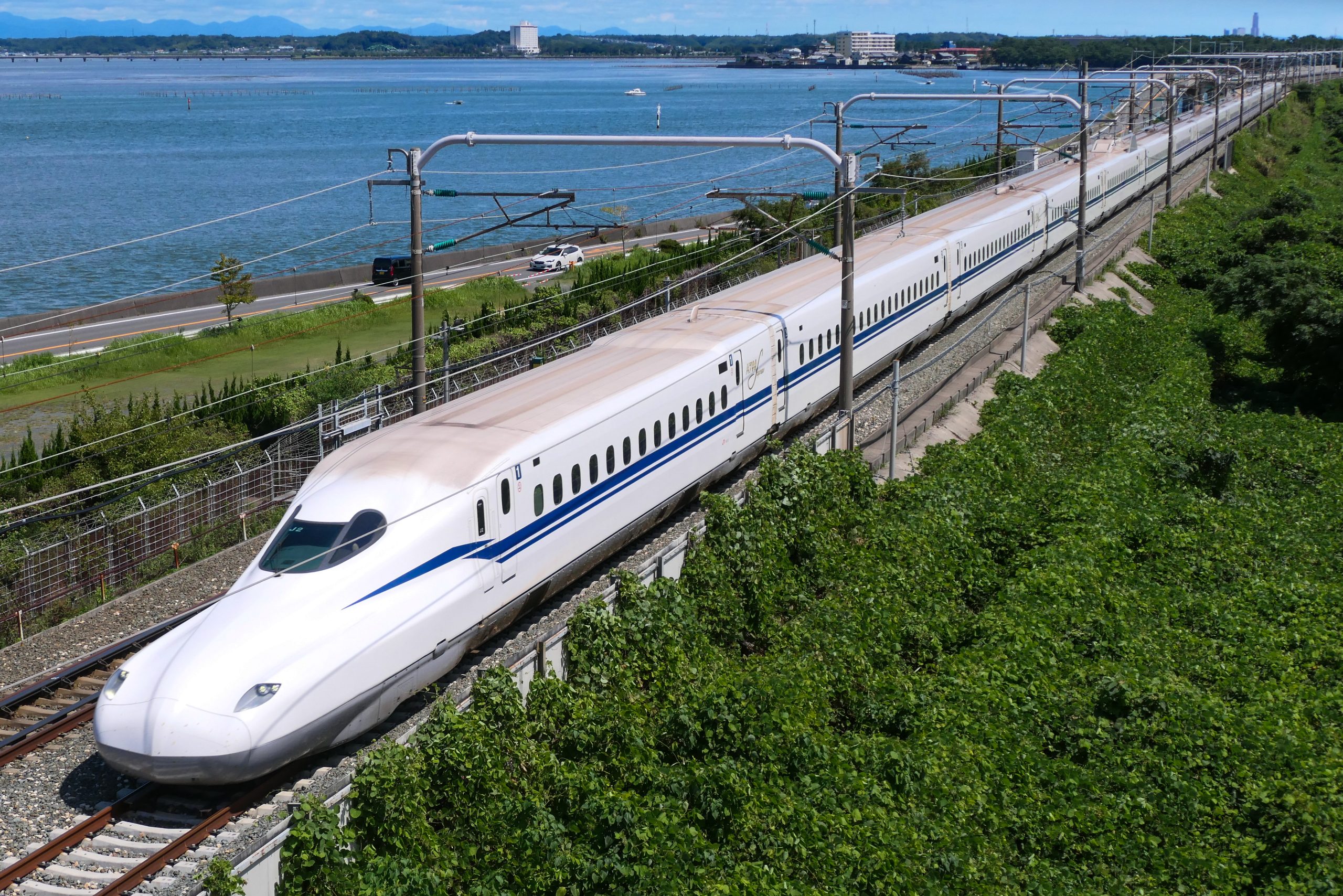
The Environmental Impact Assessment (EIA) for Thailand’s proposed Bangkok–Chiang Mai high-speed rail project remains valid, despite having been approved nearly a decade ago and with construction yet to begin.
According to the Department of Rail Transport (DRT), discussions have been held with the Office of Natural Resources and Environmental Policy and Planning (ONEP) regarding the status of the EIA for the 668-kilometre route. The project is part of a rail development cooperation framework between Thailand’s Ministry of Transport and Japan’s Ministry of Land, Infrastructure, Transport and Tourism (MLIT).
The line is planned in two phases: the 380-km Bangkok–Phitsanulok section and the 288-km Phitsanulok–Chiang Mai section.
Although EIAs are typically valid for five years, the Bangkok–Phitsanulok segment was approved on 8 August 2017 and the Phitsanulok–Chiang Mai segment on 2 August 2018. ONEP has determined that the approvals do not lapse because part of the alignment — between Krung Thep Aphiwat Central Terminal and Ayutthaya — overlaps with Phase 1 of the Thai–China high-speed rail project (Bangkok–Nakhon Ratchasima), which is currently under construction.
The shared elevated structure is designed to accommodate four tracks: two serving the northern route to Chiang Mai and two for the northeastern line toward Nakhon Ratchasima. If the Bangkok–Chiang Mai project proceeds, authorities will need to determine whether separate signaling systems for the Chinese and Japanese technologies must be installed.
The project’s future now hinges on policy direction from Thailand’s next government. Under the previous administration, then-Transport Minister Suriya Jungrungreangkit ordered the scheme to be put on hold to prioritize the Thai–China high-speed rail project due to fiscal constraints.
Japan has indicated it is not prepared to co-invest under Thailand’s proposed terms but remains willing to provide Shinkansen technology support.
A 2017 study by the Japan International Cooperation Agency (JICA) estimated the project cost at 276.226 billion baht. A 2021 review reduced the figure by 14.472 billion baht, bringing the revised estimate to 261.754 billion baht.
The proposed line would include 12 stations: Krung Thep Aphiwat Central Terminal, Don Mueang, Ayutthaya, Lopburi, Nakhon Sawan, Phichit, Phitsanulok, Sukhothai, Si Satchanalai, Lampang, Lamphun and Chiang Mai.