

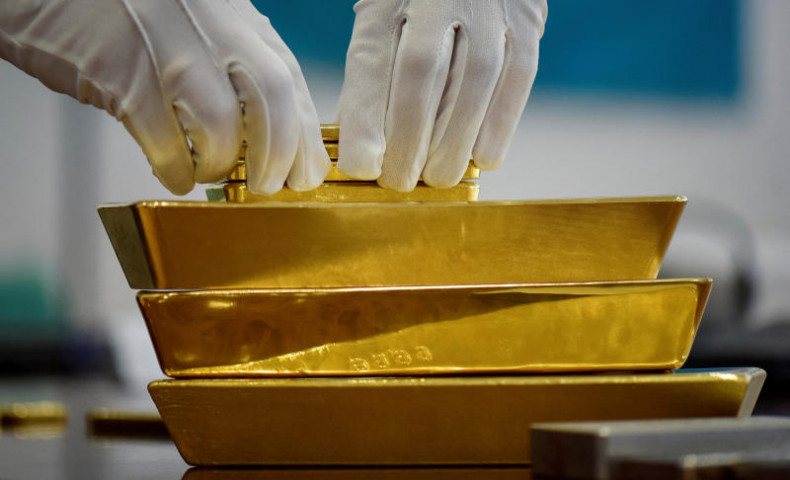
Photo credit: Reuters
Thai gold demand is expected to remain strong for a fifth consecutive year, driven by a rally in the local currency that makes gold cheaper. This ongoing trend complicates the central bank’s efforts to limit gold’s impact on the baht.
As gold prices reach new highs, more Thais are turning to the precious metal for better returns and as a safe haven amid rising global and domestic political uncertainties, stated Nuttapong Hirunyasiri, managing director of MTS Gold Group, one of Thailand’s largest bullion dealers.
According to the Thai Futures Exchange, demand excluding central bank purchases is forecasted to rise 10% this year to 53.7 tonnes, with demand in the first half increasing by 21% to 20.7 tonnes, based on World Gold Council data.
“Thais love buying gold,” Nuttapong said. “Despite rising prices, many continue to buy—active trading is happening on both sides, buying and selling.”
Gold holds both cultural and historic significance in Thailand, often used in Buddhist temples and viewed as a traditional form of savings and wealth transfer. Demand increased by 13% last year, making Thailand unique with four consecutive years of growth through the COVID-19 pandemic, according to YLG Bullion International citing WGC data.
The baht’s 7% rally this year, reaching its highest level since 2021, is partly driven by domestic gold sales, explained Jitti Tangsithpakdi, president of Thailand’s Gold Traders Association.
The Bank of Thailand has linked the baht’s rise to the gold rally and has pledged to stabilize currency fluctuations. Business and tourism groups in Thailand have urged authorities to curb the appreciation, as it adversely affects exports and tourism revenues.
Typically, when Thais sell gold—highly valued as an investment—and convert the proceeds into local currency, the baht appreciates. The currency also has a close connection to gold compared to other emerging Asian currencies.
However, central bank officials are working with the Finance Ministry to address currency movements they see as deviating from economic fundamentals, concerned about gold’s outsized influence.
Market participants like Jitti, however, downplay the connection, suggesting that the baht’s rise results more from a weaker dollar and optimism about Thailand’s new government.
“De-dollarization is also pushing people toward gold,” said Tipa Nawawattanasub, CEO of YLG Bullion Futures. “Profit-taking in gold may also contribute to the baht’s strength, but it’s not the main factor.”
Given the overall weakness in Thailand’s financial markets, where stocks are sluggish and government bond yields hit multi-year lows, efforts to discourage gold buying may be challenging. With gold prices likely to stay bullish, Nuttapong sees even more Thais investing in gold.
“The price of gold has no limits,” he said. “Global uncertainties, including geopolitical tensions and policies from U.S. President Donald Trump, continue to drive demand for gold.”