

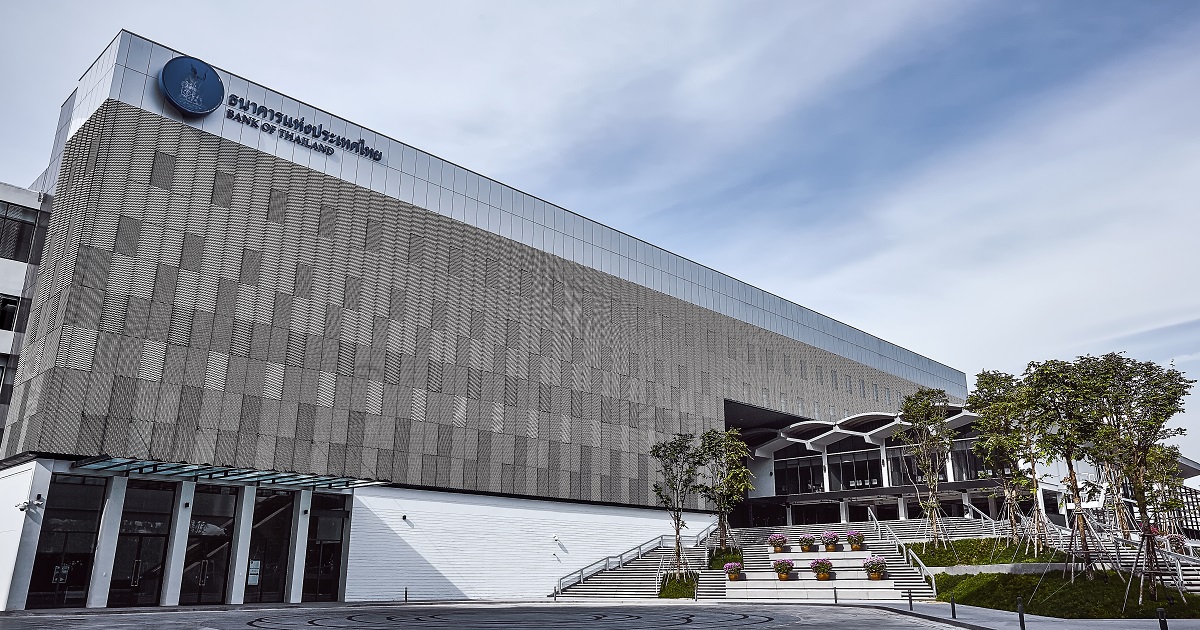
The Bank of Thailand has projected that the Thai economy will grow at less than 2% over the next 18 months, mainly influenced by pressures from US tariff policies.
During a monetary policy forum on Wednesday, Piti Disyatat, the deputy governor responsible for monetary stability at the central bank, highlighted that increased uncertainties stemming from US tariffs on Thai exports are expected to negatively affect the country’s exports, private investment, and domestic consumption in the second half of 2025 and throughout 2026.
The central bank will continue to closely monitor the impact of US tariffs to better anticipate the country’s economic outlook. Piti noted that these external shocks pose significant challenges to both the global economy and Thailand, with adverse effects likely to persist into the following year.
Given the elevated uncertainty, the Thai economy is expected to slow down in the latter half of 2025. For the third and fourth quarters, the bank forecasts an average GDP growth of 1.6% year-on-year and a slight increase of 0.1% quarter-on-quarter.
The full-year growth projection for 2025 has been revised to 2.3%, with an expected expansion of 2.9% in the first half and 1.6% in the second half. For 2026, the central bank has lowered its outlook to 1.7%. On average, quarterly GDP growth in 2026 is anticipated to be around 0.6%, which falls below the estimated potential growth rate of 0.7–0.8% per quarter.
Regarding exports, the bank expects growth of 4% in 2025 but a contraction of 2% in 2026, primarily due to the impact of US tariffs. Private investment is projected to increase by 1.7% this year but slow down to 0.9% next year, while domestic consumption is expected to grow by 2% in 2025 before easing to 1.7% in 2026.
Exports are anticipated to decline by 4% in the second half of this year after a robust 12.6% growth in the first half driven by front-loaded shipments. Piti emphasized that the effects of these external shocks are expected to continue into next year, influencing the central bank’s monetary policy decisions.
The bank indicated that maintaining policy flexibility is crucial to support economic resilience amid ongoing uncertainties. Piti added that cutting the policy rate would have limited impact on boosting economic activity given the currently subdued demand for loans.
Sakkapop Panyanukul, the assistant governor for monetary policy, pointed out that domestic political uncertainties, such as delays in passing the fiscal budget, are additional factors to watch as the Thai economy faces political risks.