

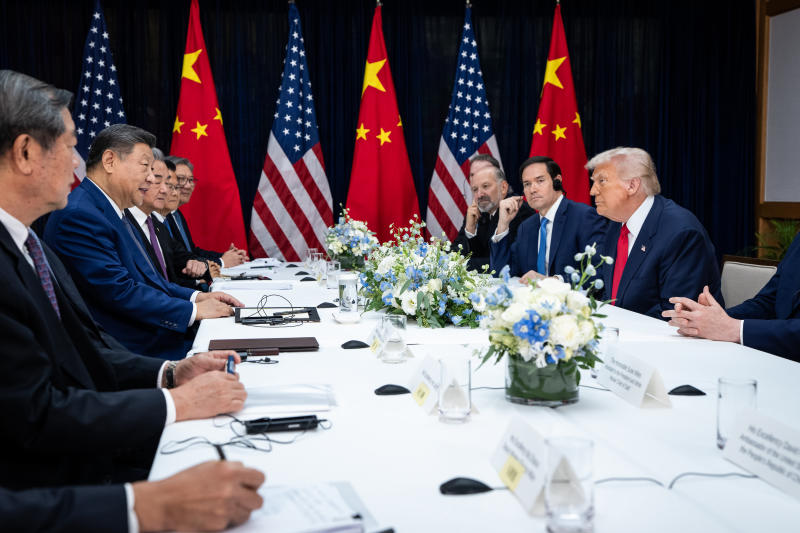
Photo Credit: New York Times
Donald Trump and Xi Jinping are set to meet in Beijing this week for a high-level summit expected to shape the next phase of US-China relations.
The two-day meeting will focus on major global issues including the conflict in Iran, trade tensions, Taiwan, artificial intelligence, security in the South China Sea, and economic cooperation. The leaders last met in South Korea in October, where they agreed to temporarily ease a damaging trade dispute between the world’s two largest economies.
Since then, geopolitical tensions have intensified. The ongoing conflict involving Iran — one of China’s closest Middle East partners — has triggered energy market concerns and shifted some US military focus away from Asia. Meanwhile, China continues to face economic pressures including slower growth, rising energy costs, and concerns over weakening global demand.
Trade is expected to remain a central topic during the summit. Washington is reportedly pushing for increased Chinese purchases of American products such as Boeing aircraft, beef, and soybeans, while also proposing new economic cooperation mechanisms focused on areas with lower national security risks.
Beijing, meanwhile, is expected to prioritise discussions surrounding tariffs, technology restrictions, and Taiwan. China is likely to seek an extension of the existing trade truce and request reduced US export controls on advanced semiconductor technology.
The summit may also address cooperation on artificial intelligence risk management, fentanyl trafficking, and China’s expanding nuclear capabilities. Trump has also indicated he plans to raise the case of Hong Kong activist Jimmy Lai.
Despite the broad agenda, analysts believe major breakthroughs remain unlikely. Experts expect more limited outcomes, including modest investment agreements and a possible extension of last year’s temporary trade arrangements.
Tensions surrounding Iran could complicate discussions. While China has encouraged diplomatic talks, it has criticised aspects of US foreign policy and opposed certain American sanctions targeting Chinese companies involved in Iranian oil trade.
Analysts say the meeting nevertheless remains important, as both sides attempt to stabilise relations while continuing to reduce economic and strategic dependence on each other amid growing global competition.