

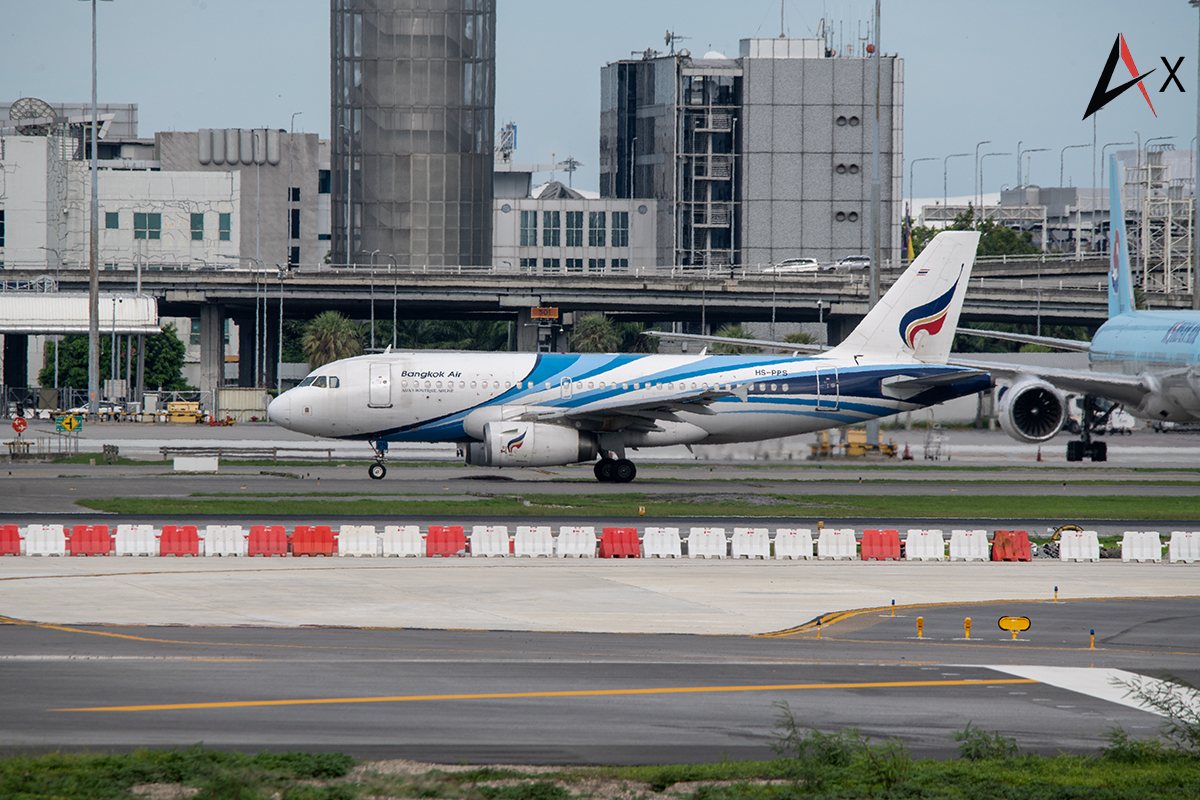
SET-listed Bangkok Airways has decided to cancel its plans to add two additional single-aisle aircraft to its fleet, primarily due to sluggish traffic on the Thai-Cambodian routes. Nevertheless, the airline remains committed to expanding its fleet to 40 aircraft, the same number it operated in 2019.
The airline is also set to upgrade Trat Airport with a 400-million-baht budget during the initial phase, expected to be completed by the third quarter of 2026. In the long term, Bangkok Airways aims to list the airport in the BA Airport Leasehold Real Estate Investment Trust (BAREIT).
Puttipong Prasarttong-Osoth, President of Bangkok Airways, stated that the airline anticipates ending the year with 23 aircraft, having already refrained from adding two jets previously planned for this high season due to decreased demand, particularly on its Cambodian routes.
Despite this, the airline plans to replace its 10 existing turboprop ATRs with new aircraft of the same type and aims to restore its fleet to pre-pandemic levels of 40 within five years.
“Our goal is to carry 4.3 million passengers this year, out of a total seat capacity of 5.7 million,” Puttipong said. “We’ve already secured 2 million passengers in the first half, so this target remains feasible. However, weaker tourist spending means our profit may be lower than last year.”
Forward bookings from September to December indicate a 4% growth, primarily driven by a 7% increase on routes to Samui, while other international routes have contracted by 3%.
He also mentioned plans to upgrade Trat Airport infrastructure in 2025 to handle at least 250,000 passengers annually. In the first half of the year, the airport served 40,427 passengers and is projected to handle between 80,000 and 90,000 passengers by the end of the year.
The airport’s single runway will be extended from 1,800 to 2,000 meters, allowing it to accommodate up to three small–medium aircraft such as A320s, A319s, B737s, or two turboprop planes like the ATR72. Additionally, the passenger terminal will be expanded from 2,100 to 3,400 square meters. Its total area of 1,600 rai remains largely undeveloped, providing room for future growth.
Puttipong highlighted the potential for Trat Airport to host international flights, especially from southern China, due to its proximity—only 17 kilometers—from the Koh Chang ferry pier, connecting travelers to popular eastern islands such as Koh Chang and Koh Kood.
Currently, Bangkok Airways operates two daily flights using 70-seat ATR72-600 aircraft. From October 2025, this will increase to three daily round trips to meet peak-season demand.
Regarding U-Tapao International Airport’s expansion, the airline, as a partner in the U-Tapao International Aviation Company, recently discussed revisions to the development plans for the Eastern Economic Corridor (EEC). The initial phase aimed to accommodate 12 million passengers annually but has now been scaled back to approximately 3 million passengers in the first phase, with plans to eventually expand capacity to 60 million over a 50-year concession period.
Puttipong mentioned that, due to changes in government, the company might propose a one-month timeline for the new cabinet to review and approve the updated EEC project proposals.