

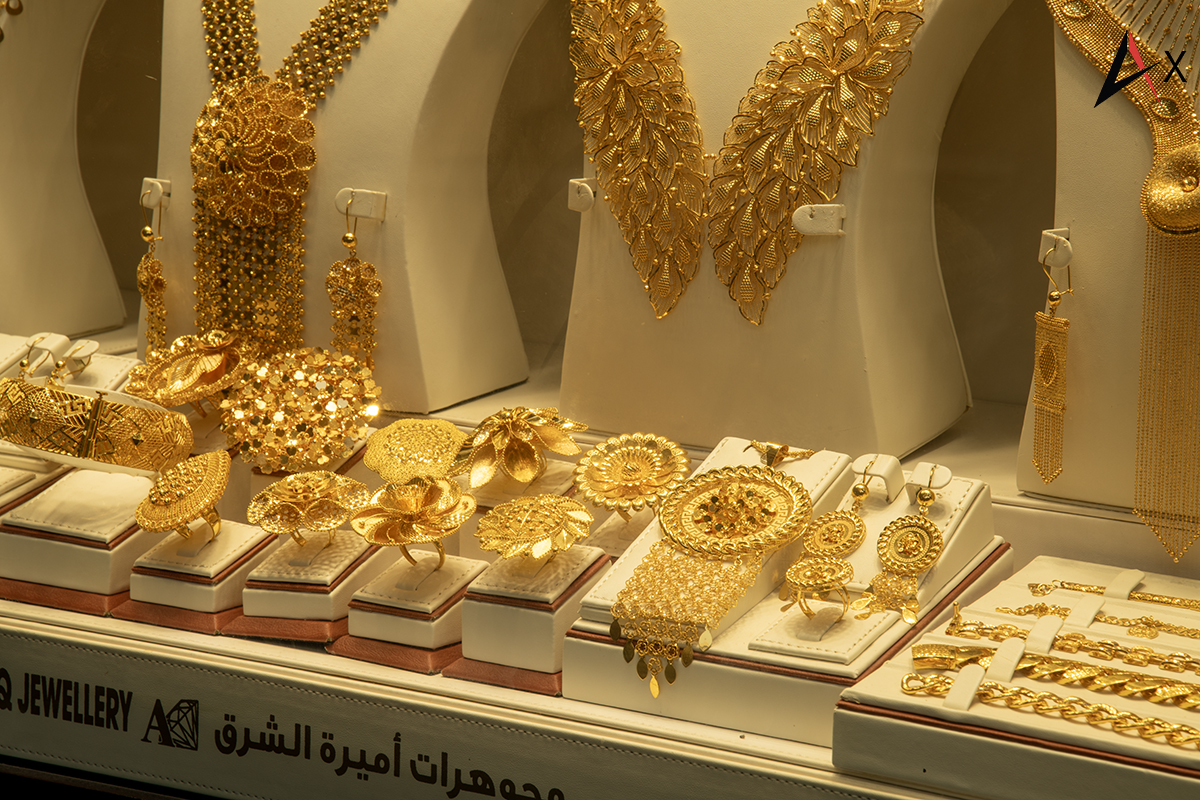
Gold surged to a new peak, reaching a record high as expectations of U.S. Federal Reserve rate cuts and mounting concerns over the central bank’s future bolstered the ongoing multi-year rally in precious metals.
On Tuesday, spot gold rose by as much as 0.9%, surpassing US$3,508 per ounce—outperforming its previous April peak—before trimming some gains. The metal has gained over 30% this year, marking it as one of the top-performing major commodities.
The recent rally has been driven by anticipation that the Federal Reserve will cut interest rates this month, following Fed Chair Jerome Powell’s cautious signals that a reduction could be forthcoming. The upcoming US jobs report this Friday is expected to further indicate a softening labor market, reinforcing the case for rate cuts. This has increased demand for precious metals, which do not pay interest and tend to benefit from lower interest rates.
“Investors are increasing their gold holdings, especially with rate cuts on the horizon, which is pushing prices higher,” said Joni Teves, strategist at UBS Group AG. “Our baseline scenario is that gold will continue to reach new highs over the coming quarters. A low-interest-rate environment, weaker economic data, and ongoing macroeconomic uncertainty and geopolitical tensions all support gold’s role as a portfolio diversifier.”
Both gold and silver have more than doubled over the past three years, with geopolitical tensions, economic uncertainties, and global trade issues fueling investment in these traditional safe-haven assets. Recent political developments, including President Donald Trump’s increased criticism of the Fed—coupled with discussions about potentially removing Fed Governor Lisa Cook—inject additional uncertainty into markets. If Trump’s move is deemed legal, he could replace her with a dovish-leaning official, potentially influencing monetary policy. Meanwhile, a federal appeals court recently ruled that Trump’s global tariffs were unlawfully imposed under emergency laws, adding to uncertainties and possibly delaying expected economic benefits.
According to Christopher Wong, currency strategist at Oversea-Chinese Banking Corp, gold may need to close above $3,500 on a daily basis to sustain momentum, noting that earlier in April, gold’s peak was only reached intra-day. He also cautioned that geopolitical risks and policy uncertainties could re-emerge, providing additional support for gold.
Meanwhile, silver has outperformed gold this year, rising over 40%, and crossed the $40 per ounce level for the first time since 2011 on Monday. The metal’s industrial applications in renewable energy technologies, such as solar panels, bolster its appeal. The market continues to face a fifth consecutive year of deficits, according to the Silver Institute, with a weaker US dollar enhancing buying power in major markets like China and India.
Investor interest in silver ETFs remains strong, with holdings expanding for seven consecutive months as of August. This demand has depleted available metal stocks in London, leading to continued tightness in the market. Correspondingly, lease rates, which reflect the short-term cost of borrowing silver, stay elevated at around 2%, well above typical levels near zero.
As of early London trading, spot gold was up 0.3% at $3,484.61 per ounce, with the Bloomberg Dollar Spot Index rising slightly by 0.1%. Silver remained relatively flat at $40.6744 per ounce. Meanwhile, platinum gained ground, while palladium declined.
In Thailand, the Gold Traders’ Association reported that gold prices increased by 300 baht on Tuesday afternoon. The buy and sell prices for bullion stood at 53,100 and 53,200 baht, respectively, with gold ornaments priced at 52,044.28 and 54,000 baht.