

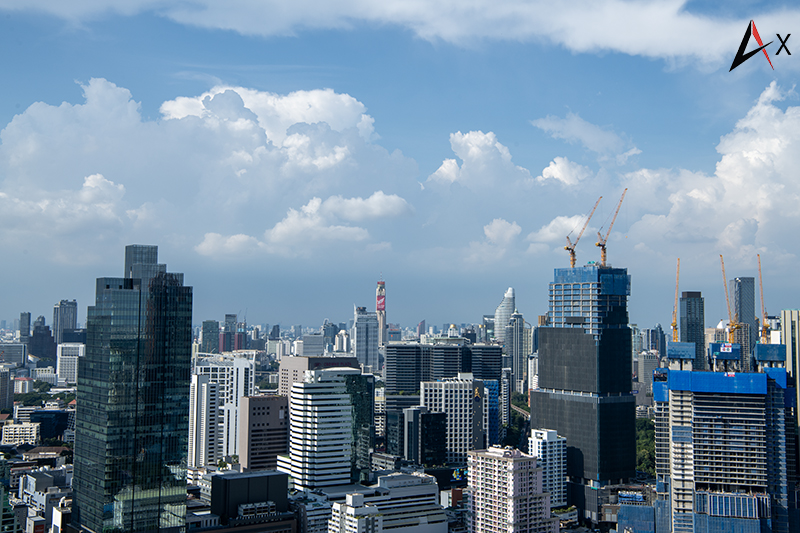
Bangkok’s office market saw its occupancy rate fall below 80% for the first time since 2004, primarily due to an influx of new Grade A office supply that has attracted tenants away from older buildings. As a result, landlords are responding by lowering rents, renovating properties, or repurposing spaces, according to CBRE Thailand.
Chotika Tungsirisurp, head of consulting and research at CBRE Thailand, explained that the overall occupancy rate declined to 79.3% in the second quarter of 2025, marking the first drop below 80% in over two decades. Unlike in 2004, when demand was rebounding from 78.9% in 2003 and rising to over 85% in subsequent years, this year’s decline reflects fierce competition driven by the surge in new completions.
During the second quarter, supply increased by 145,814 square meters, led by developments such as One Bangkok Tower 5 (100,534 sq m) and Central Park Offices (60,000 sq m). Additionally, about 12,000 sq m was added through the renovation of the UOB Sathorn building. These new Grade A+ towers set international standards, offering features like direct transit links, extensive retail components, and sustainability credentials that attract multinational companies and tenants seeking upgrades.
Despite the increase in supply, net absorption remained positive at 36,825 sq m, mainly driven by relocations into Grade A properties outside the Central Business District (CBD), particularly in Bangkok’s northern corridor. Active sectors included insurance, conglomerates, and logistics firms, which are taking advantage of favorable leasing conditions to move into higher-quality spaces, thereby reshaping the market.
Grade A non-CBD properties saw a net take-up of 54,387 sq m, primarily from internal relocations within the same area, raising occupancy from below 65% to over 71%. Grade A+ properties recorded a net addition of 7,907 sq m in the quarter. Conversely, older Grade B buildings across both CBD and non-CBD areas experienced negative net take-up as tenants downsized or relocated, with some spaces being entirely removed—such as three office buildings totaling 26,720 sq m that have been converted into hotels or are awaiting new uses.
Landlords managing older assets face difficult choices, including whether to invest further, repurpose buildings for alternative uses, or demolish and rebuild. Many are opting for rent discounts, flexible leasing options, or renovations to retain existing tenants and attract new ones. However, cosmetic upgrades alone are insufficient, as tenants now prioritize modern features such as sustainability, wellness, and digital infrastructure—elements that only newer buildings can reliably provide.
CBRE predicts that net absorption will increase by 10-15% in 2025 compared to last year, mainly in new Grade A and A+ buildings, while older towers are likely to continue losing tenants until they are repositioned. The ongoing supply increase is accelerating the shift in the market’s focus from mere occupancy to quality, efficiency, and adaptability.
For tenants, relocating to newer, more suitable buildings at competitive rental rates offers significant advantages—better quality facilities and cost savings—making such decisions increasingly strategic. Tattayakorn Benjapattharaseth, senior vice-president and head of offices at One Bangkok, highlighted that flexibility has become a key selling point within Bangkok’s competitive office market, especially as new supply continues to grow.
Some companies prefer to migrate from older buildings to newer ones while managing costs by opting for rental furniture instead of outright purchases, helping them reach swift decisions. One Bangkok has completed two of its planned five office towers, each with around 100,000 sq m of leasable space, and is offering current rental rates of approximately 1,500 baht per sq m. Tower 4 has achieved occupancy of 85%, while Tower 3 is at 60% with a goal of reaching 70% shortly. Pre-leasing for Tower 5 is at 50%, and work is ongoing for Towers 1 and 2.