

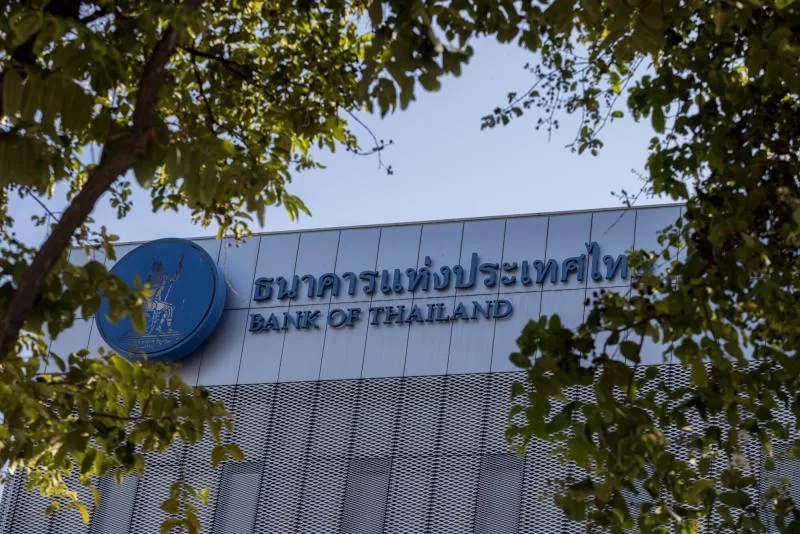
The Bank of Thailand anticipates that Thailand’s GDP growth for this year and the next will fall short of its potential, influenced by both cyclical and structural challenges.
In the minutes of the Monetary Policy Committee (MPC) meetings held on December 12 and 17, 2025, and released yesterday, it was highlighted that the Thai economy in 2026 and 2027 is expected to expand at rates below its potential. The outlook is further complicated by increasing risks from cyclical and structural factors, as well as growing vulnerabilities in certain sectors.
Projections indicate that GDP growth will be around 1.5% in 2026 and 2.3% in 2027, compared to an estimated 2.2% in 2025. This slowdown reflects a moderation in private consumption, aligned with income growth, alongside signs of heightened caution among middle- and high-income households, especially regarding spending on non-essential items.
A decline in merchandise exports is also anticipated to weigh on growth, mainly due to the impact of US tariff measures. Additionally, slower government spending growth—following the 2027 fiscal budget framework that aims to narrow the fiscal deficit—will likely further constrain GDP. The minutes noted that the upcoming election might delay budget disbursements for fiscal 2027 in late 2026, with a return to faster spending in early 2027.
The services sector is expected to recover gradually, supported by an estimated increase in tourist arrivals to 35 million in 2026 and 36 million in 2027, along with higher expenditure per visitor. Private investment is also projected to grow, driven by new foreign direct investment encouraged through the Thailand FastPass measures.
However, the MPC raised concerns about uneven growth, noting that economic activity remains concentrated among large firms and specific sectors such as major tourism operators and electronics exporters. Meanwhile, small businesses and manufacturers in other industries continue to face vulnerabilities and intensifying competition.
The minutes also pointed out that Thailand’s ongoing structural transformation might result in a new resource allocation pattern, with significant implications for the labor market and long-term income prospects. The shift from manufacturing to services—driven by increased competition—could lead to labor relocation, potentially resulting in lower value-added activities and affecting income levels, private consumption, and household debt, which remains high.
Given the economic slowdown and increased risks, the MPC considered that monetary policy could become more accommodative to support economic recovery. Such a stance is seen as a way to ease debt burdens on vulnerable groups and boost the effectiveness of other financial measures and government policies. The committee also noted that a more flexible monetary policy is unlikely to pose significant risks to long-term financial stability, as most businesses remain cautious about debt and investment.