


Thailand’s economy expanded by 2.8% year-on-year in the first quarter of 2026, up from 2.5% in the previous quarter, driven mainly by strong domestic investment growth, according to the National Economic and Social Development Council (NESDC).
Finance Minister Ekniti Nitithanprapas said investment rose at its fastest pace in 11 years, supported by increases in both private and public sector spending. However, he warned that the figures do not yet reflect the full impact of the energy crisis that began in March.
Rising inflation, higher living costs, and weakening consumer purchasing power are expected to weigh on the Thai economy in the coming months, particularly affecting SMEs and the food sector. Inflation climbed to 2.9% in April, while production costs for some SME products have reportedly increased by around 10%.
To help ease the growing cost-of-living pressure, the government is preparing to propose the “Thai Chuay Thai Plus” support scheme to the cabinet.
Credit: Bangkok Post
Thailand’s “Thais Help Thais Plus” programme will be funded through the 400-billion-baht emergency loan decree, with the government covering 60% of living expenses while citizens contribute 40%.
The package will also support Thailand’s transition toward renewable energy, including solar power, alternative fuels, electric trucks, and fertiliser assistance for farmers. Finance Minister Ekniti Nitithanprapas said the stimulus is necessary to support economic growth and prevent public debt from rising further.
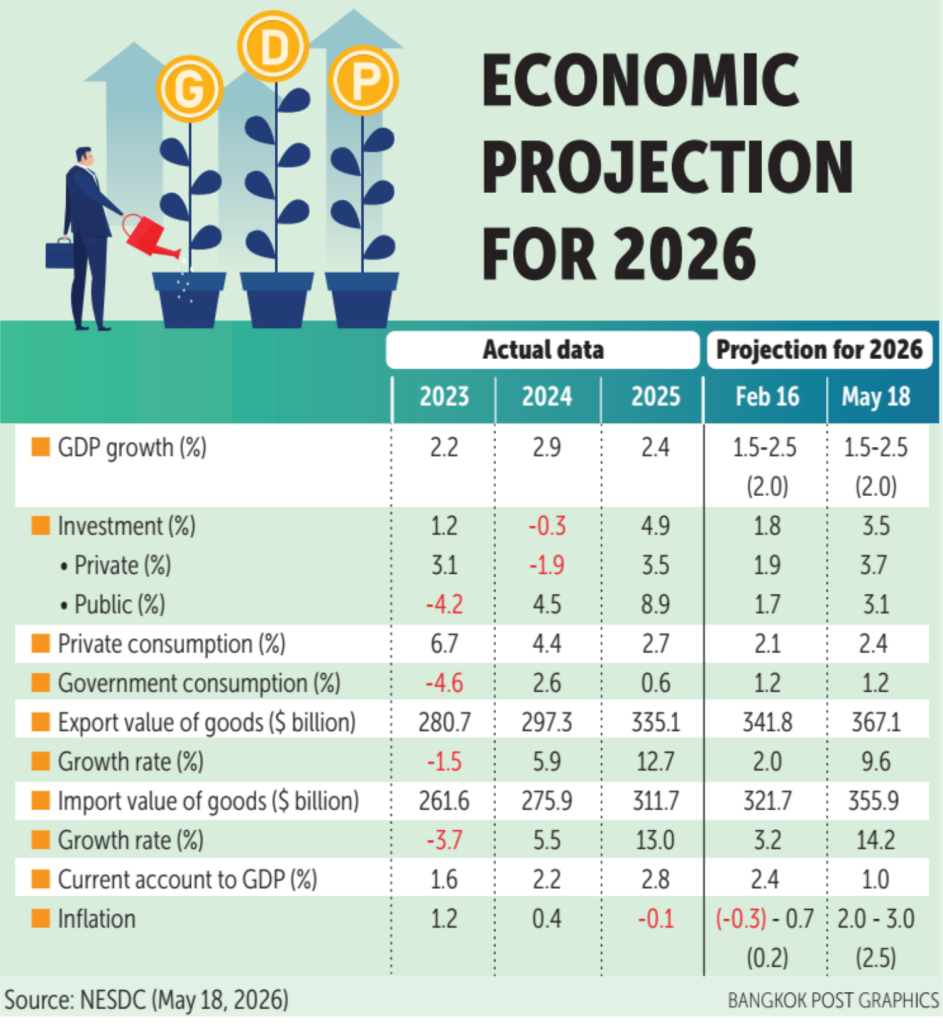
According to National Economic and Social Development Council secretary-general Danucha Pichayanan, Thailand’s exports surged 17.8% in the first quarter, while imports jumped 33.1%, resulting in the country’s first trade deficit in 14 quarters.
The NESDC forecasts Thailand’s economy will grow between 1.5% and 2.5% in 2026, supported by domestic spending, investment, government stimulus measures, and export growth.
However, economists warned economic momentum could weaken in the second quarter as the ongoing Middle East conflict increases inflationary pressure, weakens consumer spending, and impacts investment confidence. Poonyawat Sreesing noted growth could slow further if government stimulus measures are delayed.