

Asian markets came under pressure following the latest signals from the Federal Reserve, which reinforced expectations that US interest rates will stay elevated for an extended period. The central bank’s hawkish stance is reshaping sentiment across both equity and bond markets.
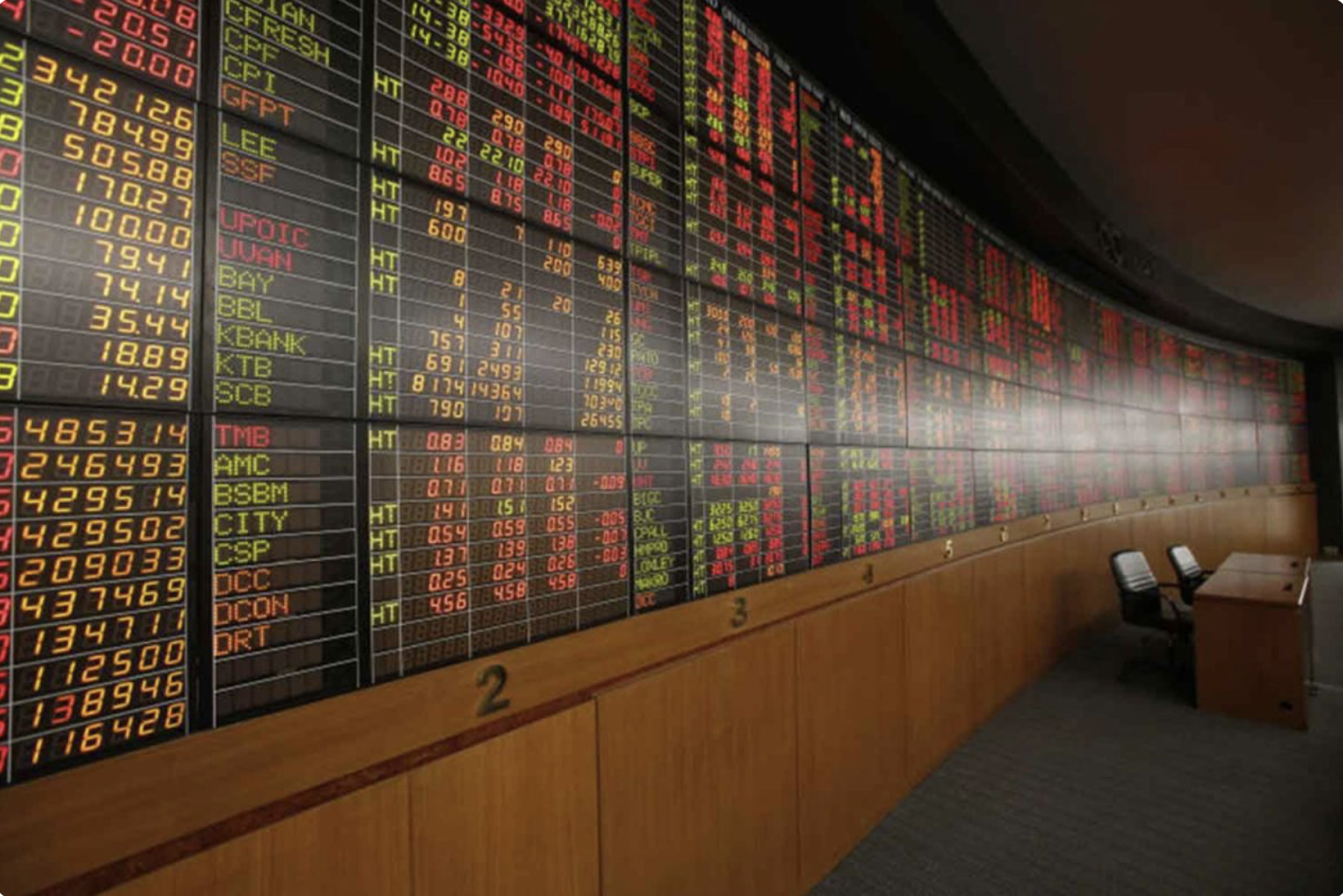
Regional bourses, including the Stock Exchange of Thailand, declined on Thursday, tracking overnight losses on Wall Street after the Fed kept its policy rate unchanged at 3.50–3.75%. This marks the third consecutive pause this year and was largely anticipated by markets.
However, the decision exposed notable divisions within the committee, with an 8–4 vote reflecting the highest level of dissent in decades. Outgoing Fed chairman Jerome Powell acknowledged that inflation remains persistent, largely driven by elevated energy prices linked to ongoing geopolitical tensions.
The Fed’s firm tone prompted a sell-off in bonds, pushing US Treasury yields higher and adding volatility to equity markets—particularly among high-valuation technology stocks.
According to Koraphat Vorachet, head of research at Krungsri Securities, US equities are entering a more volatile phase as rising bond yields weigh on valuations. Technology shares are especially vulnerable, with higher yields—particularly on the 2-year and 10-year Treasuries—compressing equity multiples.
KSS recommends a selective investment strategy or tactical portfolio adjustments, especially if US 10-year yields remain above the 4.5–4.6% range, which could continue to limit market upside. The brokerage highlighted Thailand as relatively resilient, supported by foreign inflows, and pointed to opportunities in banking, energy, refining, electronics and retail sectors, while tourism and ICT continue to face headwinds.
On the domestic front, the Bank of Thailand kept its policy rate steady at 1%, signalling that current levels remain appropriate amid slowing economic growth.
Asia Plus Securities expects stable local rates, combined with a higher global rate environment, to support a gradual recovery in banks’ net interest margins (NIM) in the second half of 2026. NIM is projected to bottom out in the second quarter, with deposit repricing helping to drive improvement. Banks with a higher proportion of floating-rate loans are expected to benefit the most.
Amid global volatility, ASPS advises focusing on high-dividend Thai banking stocks as a defensive strategy. Despite stronger fundamentals, the sector has underperformed the broader market, presenting potential upside. Bangkok Bank and Kasikornbank are seen as lagging plays with room for catch-up, particularly ahead of mid-year interim dividend payouts.
Looking ahead, while the Fed maintains a cautious and hawkish stance, markets are beginning to anticipate a potential policy shift under incoming chair Kevin Warsh, who is viewed as more dovish and possibly open to rate cuts if labour market conditions weaken later this year.
In the near term, market direction will largely depend on bond yields. Elevated yields could continue to pressure equities, while easing inflation may create room for rate cuts and a recovery in risk assets. For now, analysts favour a barbell strategy—balancing selective exposure to global equities with high-dividend domestic investments, particularly within Thailand’s banking sector.