

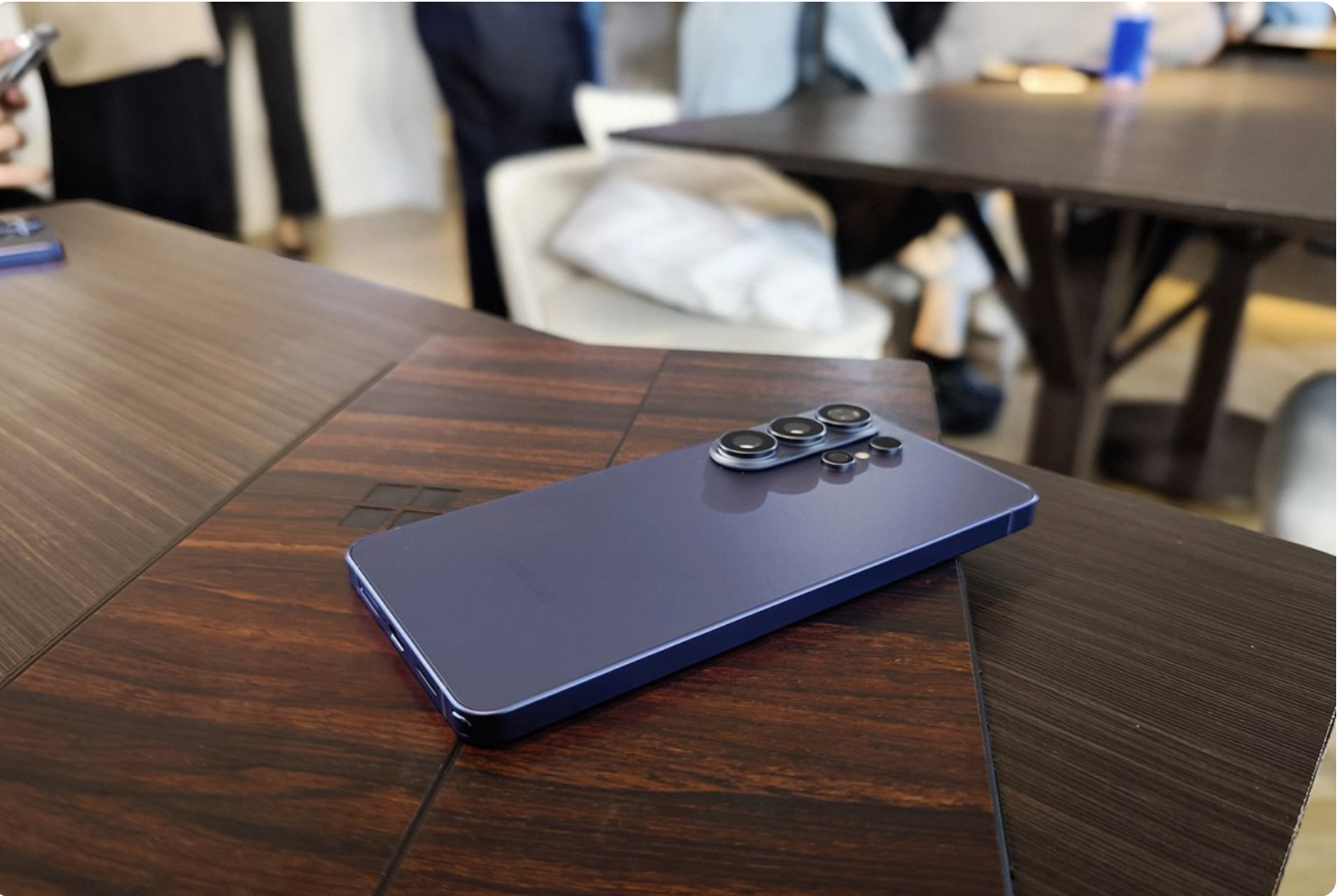
Photo Credit: Komsan Jandamit
Rising memory component costs have driven up launch prices for Samsung’s newest flagship smartphones, with several models in the Galaxy S26 lineup debuting at prices up to 20% higher than their Galaxy S25 predecessors in Thailand.
Samsung Electronics this week introduced the Galaxy S26 series, highlighting proactive, on-device artificial intelligence (AI) as its key differentiator in the premium smartphone market. The company is wagering that deeper AI integration at the device level — rather than relying primarily on cloud-based features — will support higher pricing in an increasingly competitive high-end segment.
In Thailand, the standard Galaxy S26 (12GB/256GB) is priced at 33,900 baht, up from 29,900 baht for the S25, marking a 13.4% increase. The 12GB/512GB version rises to 41,900 baht from 34,900 baht, a 20.1% jump.
The Galaxy S26+ (12GB/256GB) climbs 10.8% to 40,900 baht, compared with 36,900 baht for the S25+, while the 512GB variant increases 16.7% from 41,900 baht to 48,900 baht.
Price adjustments are more modest at the top end. The Galaxy S26 Ultra (12GB/256GB) remains at 46,900 baht. The 12GB/512GB model inches up 3.8% to 54,900 baht from 52,900 baht, and the 1TB version rises 6.3% from 62,900 baht to 66,900 baht.
The pricing approach indicates Samsung is absorbing part of the cost pressure on its highest-tier model while passing a greater share of memory-related increases onto mid-tier flagship variants.
The S26 series is positioned as the third generation of Galaxy AI devices, designed to anticipate user needs and handle complex tasks in the background — from schedule management to content organisation — with minimal manual input. Rather than introducing standalone AI features, Samsung is embedding AI into core system operations.
TM Roh, chief executive and president of Samsung Electronics, said the company aims to make AI dependable and seamlessly integrated into everyday use, operating quietly in the background so users can focus on what matters most.
The Galaxy S26 Ultra is powered by a customised Snapdragon 8 Elite Gen 5 mobile platform for Galaxy, delivering performance improvements of up to 19% in the CPU, 39% in the neural processing unit (NPU), and 24% in the GPU. The significant boost in NPU capability underscores a shift toward sustained AI processing rather than headline benchmark performance.
Samsung is also incorporating generative AI editing tools directly into its native camera and gallery apps. The upgraded Photo Assist suite allows users to modify scenes, restore objects and refine content using natural language prompts, reducing reliance on third-party applications.
A notable hardware addition to the S26 Ultra is a built-in privacy display that limits visibility from side angles without compromising screen quality.
According to Sheng Win Chow, senior analyst at research firm Omdia, Samsung led Thailand’s smartphone market in 2025 with more than a 20% share, and the Galaxy S25 series shipped nearly 500,000 units locally — the highest volume in Southeast Asia. He noted that despite the higher pricing compared with the S25 generation, the increases reflect broader industry cost pressures, including rising DRAM and NAND prices and the standardisation of higher memory and storage configurations, which have raised overall production costs.