

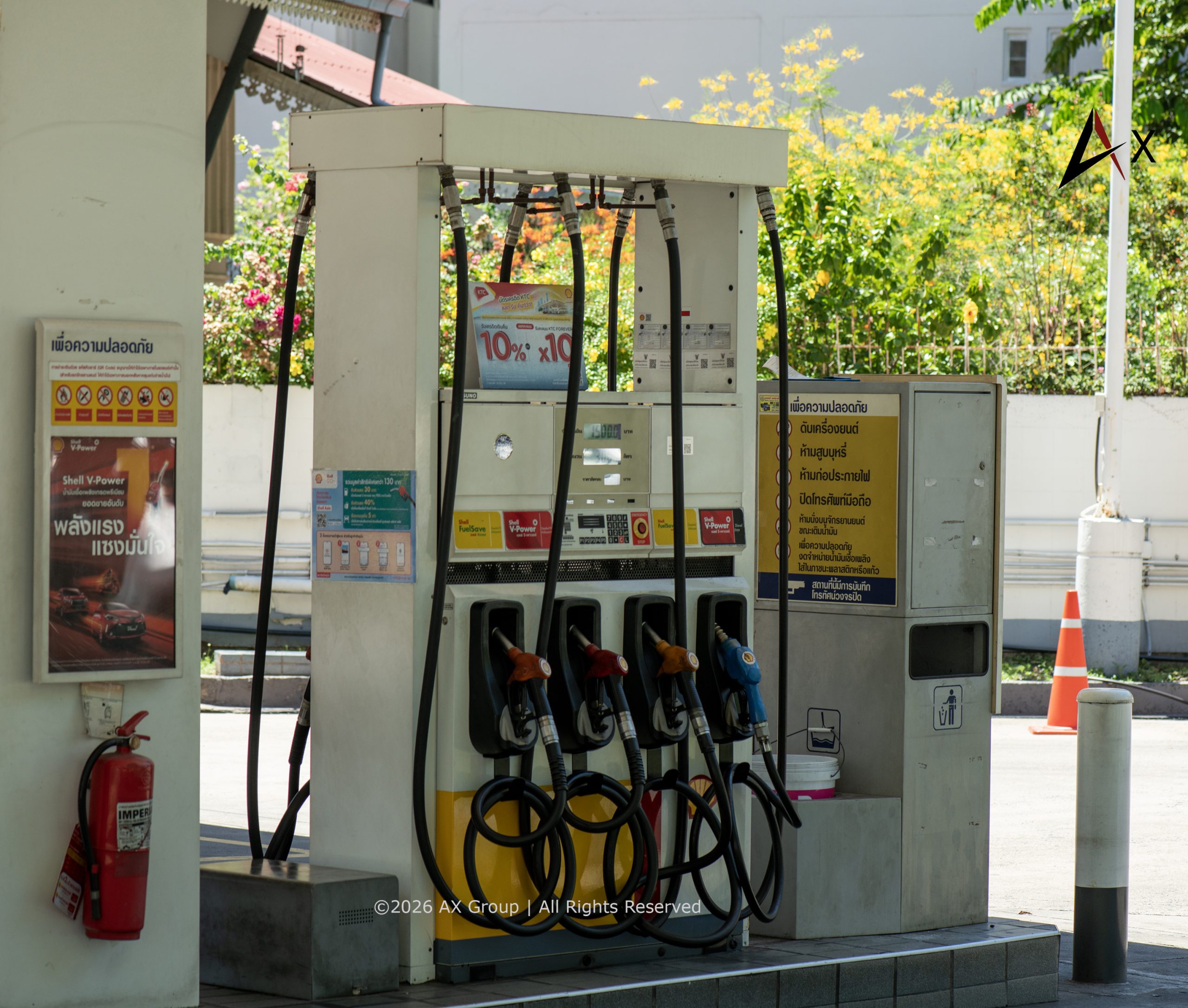
Thailand’s fuel consumption recorded strong growth in the first quarter of 2026, increasing 5.3% year-on-year to an average of 167 million litres per day, according to the Department of Energy Business (DOEB).
The increase came before the recent energy market volatility triggered by US and Israeli military strikes on Iran, which later disrupted global energy markets and heightened concerns over fuel prices.
Mr Sarawut Keawtathip, director-general of the DOEB, said lower oil prices during the first quarter allowed the state Oil Fuel Fund to continue collecting contributions from gasoline and diesel consumers without the need to subsidise domestic fuel prices.
The lower pricing environment also supported stronger fuel demand across most categories.
High-speed diesel consumption rose 5.3% year-on-year to 72.3 million litres per day, while gasoline and gasohol usage increased 6.4% to 33.2 million litres daily.
Meanwhile, aviation fuel demand continued its recovery trend, with jet A-1 consumption averaging 20 million litres per day in the first quarter, up 4.3% from the same period last year. The growth was supported by increasing flight activity and expanding cargo operations.
According to the DOEB, Thailand recorded 83,043 flights during the quarter, representing a 5.8% increase year-on-year and contributing to higher jet fuel demand nationwide.
Air cargo transport also expanded strongly during the period, rising 8.94%.
Liquefied petroleum gas (LPG) consumption increased 3.7% to 17.8 million kilogrammes per day, while fuel oil demand surged 14% to 6 million litres daily, driven largely by lower global fuel prices.
However, compressed natural gas (CNG) consumption continued to decline, falling 14.3% year-on-year to 2.16 million kilogrammes per day from 2.52 million kg previously.
The decrease was mainly linked to the closure of numerous CNG refuelling stations over the past two years, reducing accessibility for heavy transport operators and discouraging usage.
On the trade side, fuel imports declined 2.1% in volume to 1.06 million barrels per day, while import value fell 8.9% to 78.3 billion baht per month.
Fuel exports also weakened during the quarter, with export volumes dropping 16% to 126,711 barrels per day. Export value declined 12.8% to 11.5 billion baht per month, the DOEB noted.