

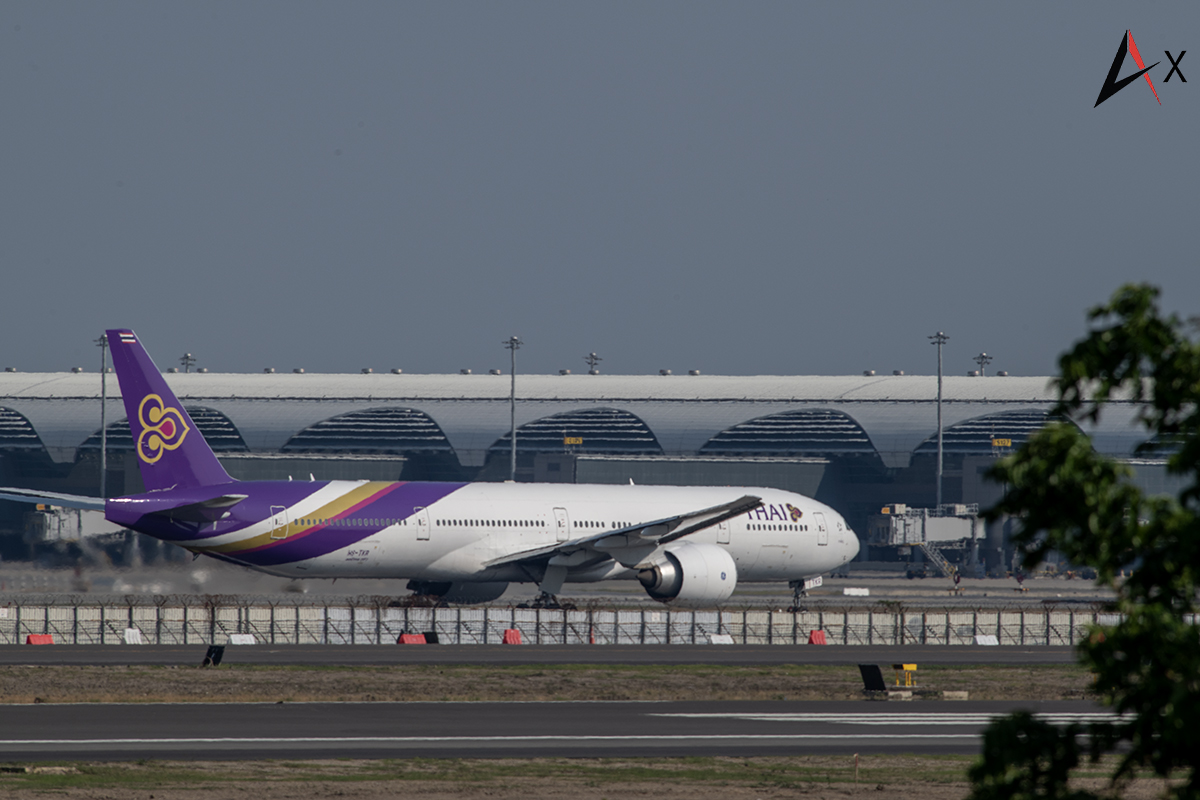
Chai Eamsiri, THAI’s CEO, stated on Saturday that these efforts aim to ensure sustainable growth and establish the airline as a key regional hub connecting Asia to other parts of the world. The strategy is designed to boost passenger numbers during the low season, improve slot utilization, and mitigate risks associated with dependence on a limited number of markets.
The airline is particularly focused on expanding its operations in China. Currently, THAI serves five Chinese cities—Shanghai, Beijing, Chengdu, Kunming, and Guangzhou—with a total of 42 weekly flights. The airline plans to double its flight frequencies on the Guangzhou and Beijing routes from seven to 14 flights per week for the 2025–2026 winter schedule. Additionally, services will resume to Xiamen, Chongqing, and Changsha, each with seven weekly flights, alongside new routes to Wuhan and Shenzhen.
This expansion is expected to double flight capacity and boost revenue from the Chinese market. These routes not only attract Chinese travelers but also travelers from Europe and Australia transferring through Bangkok, supporting THAI’s network-driven strategy. Current load factors on Chinese routes are approximately 70% in low season and around 80% during peak times.
In addition, THAI plans to launch new services to Gaya, India, and introduce several domestic routes as it receives new aircraft. The airline operates a fleet of 78 aircraft, including 58 wide-body and 20 narrow-body jets across six different types. By the end of this month, an Airbus A321neo will join the fleet, with another arriving by year-end along with a Boeing 787-9. These new aircraft will mainly serve Chinese and Indian routes, expected to be operational late this year or early 2026. Starting next year, the airline will receive 15 additional A321neos.
To address capacity needs before these new aircraft arrive, THAI is considering leasing 8–10 wide-body aircraft for six years, with a decision expected next month. Meanwhile, cabin refurbishments are underway across the Airbus A320, Boeing 777-300ER, and Airbus A350 fleets to standardize in-flight services.
Looking ahead, THAI has firm orders for 45 Boeing 787 Dreamliners powered by GEnx engines, with the first nine scheduled for delivery in 2028. The airline’s target fleet size by 2033 is 150 aircraft, comprising 17 Boeing 777-300ERs, 17 Airbus A350-900s, 64 Boeing 787s, and 52 Airbus A321neos.
Regarding passenger booking trends, the CEO noted a shift: Asian travelers now book tickets only three to four months in advance, often waiting for promotional sales, compared to over six months previously. Conversely, European passengers continue to book around six months ahead.