

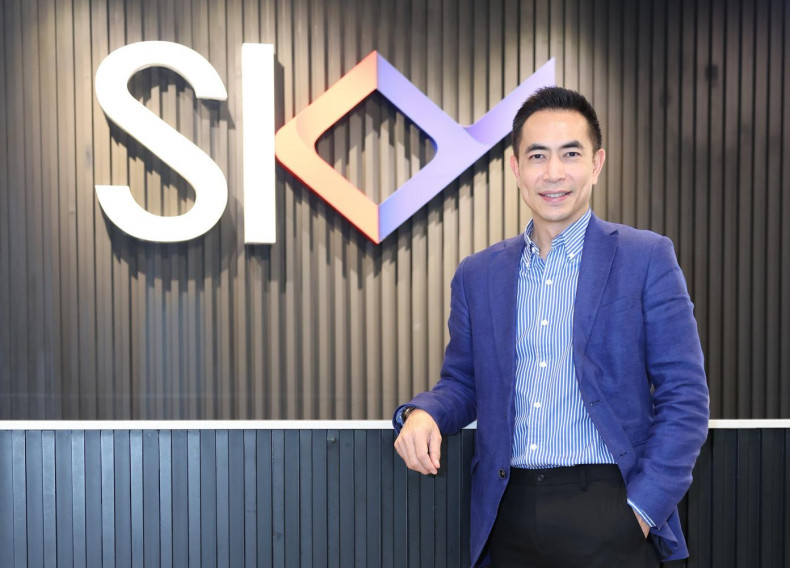
Photo Credit: SKY ICT
The government and related agencies are being urged to prioritize transforming Thailand into a regional aviation hub to help invigorate the country’s economy amid ongoing challenges.
Sithidej Mayalarp, CEO of SKY ICT—an aviation technology firm listed on the SET—highlighted that Thailand’s airports possess the necessary infrastructure and technological capabilities to serve as a key regional hub. He emphasized that easing regulations to expand domestic flight options and promoting airline slot trading could attract more inbound travelers.
“Domestic consumer spending alone isn’t enough to stimulate the economy,” Sithidej stated. “We need increased spending from international visitors to generate greater revenue.”
He pointed out that, besides Thailand’s strategic location, the nation boasts strong potential through its wellness, travel, culinary, and tourism offerings. Ensuring tourist safety and offering genuine, reasonably priced services could serve as more effective economic catalysts than policies that take longer to produce results.
According to Sithidej, three essential elements are needed to position Thailand as a premier Asian aviation hub: infrastructure, information technology support, and airport ambiance.
Asia’s major competitors, such as Singapore’s Changi Airport and Hong Kong International Airport (HKIA), serve as benchmarks. While Suvarnabhumi Airport ranks second in passenger traffic and third in freight volume in the region, it currently handles only 1.5 million tonnes of cargo annually—well below HKIA’s 5 million tonnes and Changi’s 2 million tonnes.
In passenger traffic, Suvarnabhumi Airport currently serves 45 million travelers annually, with plans to expand capacity to 80 million within three years, positioning it as a regional rival. The airport is also set to construct a fourth runway capable of handling up to 90 flights per hour, further boosting its role as a transit hub.
Thai Airways International (THAI) aims to increase its fleet from 77 to 97 aircraft by 2026 to better compete with Singapore Airlines, which currently operates over 177 aircraft and plans to grow to 200. However, the smaller size of THAI’s fleet limits its flight capacity into Thailand, which is around 40 flights per hour—far less than Singapore Airlines.
Sithidej recommended that related agencies streamline THAI’s fleet expansion approval process, as current procedures can take several months, impeding the airline’s growth efforts.
He also suggested increasing the passenger service charge for international departures at Airports of Thailand-operated airports from 730 baht to a higher rate, comparable to Singapore (around 1,300 baht) and HKIA (around 1,500 baht). Such an increase would generate additional revenue for airport development and technological upgrades without requiring government funding, and would help elevate service standards to meet international expectations.
Finally, Sithidej noted that SKY ICT recently upgraded its Common Use Passenger Processing System at 13 airports nationwide to support the expected rise in tourist numbers.