

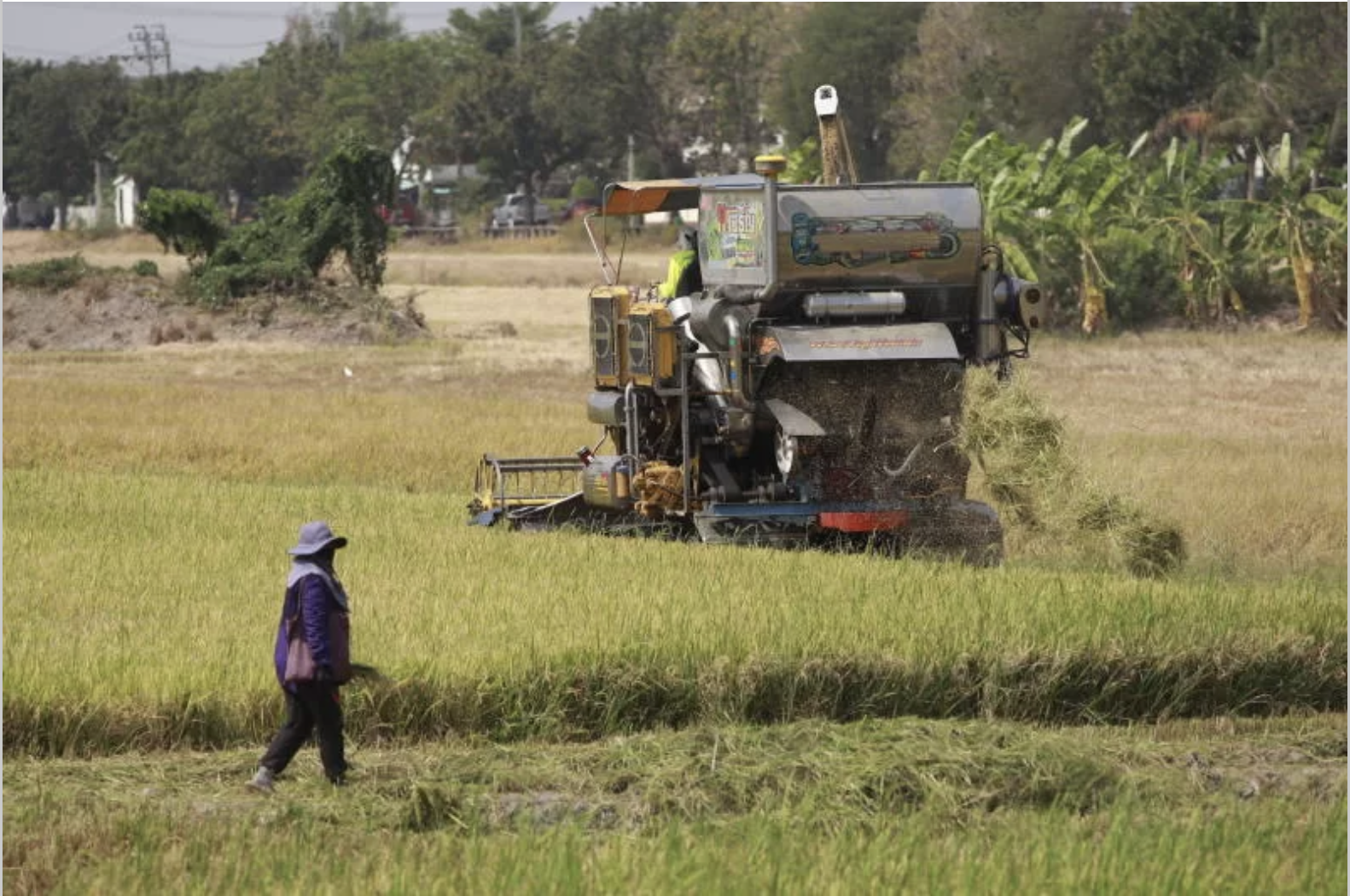
Photo Credit: Pattarapong Chatpattarasill
Thai rice export prices have continued their decline for the fifth consecutive week, reaching an 18-year low, amid sluggish demand and difficulty in securing major deals by leading exporters.
The price of Thailand’s 5% broken rice has dropped to between US$335 and US$340 per tonne, its lowest since October 2007, compared to last week’s range of $340. Traders report that demand has remained relatively stable, with customers only purchasing what is necessary, and no significant export deals have been made. Supply levels are also abundant, supporting the downward trend.
The Thai Rice Exporters Association indicated that rice exports are on track to meet the annual target of 7.5 million tonnes, though the export value is expected to decline by about 40% compared to the previous year.
Meanwhile, Indian rice prices have mostly held steady near their recent lows. The 5% broken parboiled rice was quoted at $340 to $345 per tonne—unchanged from last week and near its lowest since mid-2016. The 5% broken white rice was priced between $360 and $370 per tonne. Weak demand from Asian and African buyers, who are waiting for prices to bottom out, is contributing to the subdued market activity, explained a dealer in Mumbai.
Vietnam’s 5% broken rice was offered at $420 to $435 per tonne on Thursday, the lowest in nearly two months and down from $440 to $465 a week earlier, according to the Vietnam Food Association. A trader in Ho Chi Minh City noted that demand remains poor, especially after the Philippines extended its rice import suspension. While Vietnamese authorities have encouraged exporters to increase inventories and seek new markets to offset the impact of the suspension, these measures have not sufficiently supported price recovery.
On the domestic front, rice prices in Bangladesh have surged by 15% over the past year despite a good harvest. Market sources attribute this increase to high input costs, market manipulation by middlemen, and inefficiencies in storage, procurement, and distribution, which have adversely affected both farmers and consumers.