


Asian investors adopted a cautious stance on Friday as the deadline of July 9 to prevent significant US tariffs drew near, with only a few trade agreements finalized. President Donald Trump suggested that many trading partners might receive letters next week outlining their new tariff rates.
The SET index fluctuated between 1,080.92 and 1,128.07 points throughout the week, ultimately closing on Friday at 1,119.94, representing a 3.5% increase from the previous week. The average daily trading volume was 33.75 billion baht.
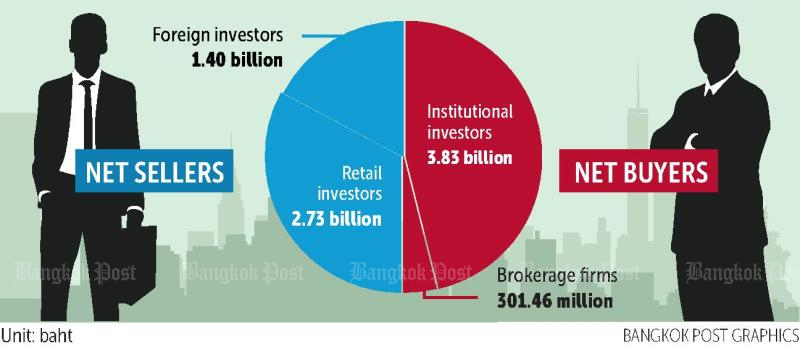
Institutional investors were net buyers, totaling 3.83 billion baht, followed by brokerage firms with 301.46 million baht. Conversely, retail investors were net sellers of 2.73 billion baht, while foreign investors sold off 1.40 billion baht.
Credit Bangkok Post
The US and Vietnam reached a trade agreement under which Vietnamese-origin goods will face a 20% tariff, while transshipped items will be taxed at 40%. In exchange, Vietnam will offer full market access to US products by implementing zero tariffs.
Economists view Vietnam’s deal with the US as a wake-up call for other Asian nations, highlighting the reality that elevated tariffs may remain a lasting feature of international trade.
President Trump has threatened to impose tariffs of 30% or 35% on Japan if a deal isn’t finalized by the upcoming Wednesday, which would significantly exceed the 24% rate announced on “Liberation Day” in April. Meanwhile, he also indicated that a future US-India trade agreement would be of a “different kind,” with substantially fewer tariffs.
The US House has passed Trump’s landmark tax and spending legislation, paving the way for him to sign it on July 4. Additionally, Trump supports a Senate bill proposing tariffs of up to 500% on oil imports from Russia by China and India, aiming to pressure Vladimir Putin into negotiations over Ukraine.
Federal Reserve Chair Jerome Powell noted that interest rates would likely be lower now if Trump hadn’t announced tariffs, as the trade measures prompted the Fed to delay rate cuts due to inflation concerns. Trump also threatened to cut billions in subsidies to Musk’s companies, escalating tensions between the president and the billionaire tech mogul, once allies.
Meanwhile, multiple outlets report that the US has eased export restrictions on chip design software for China, signaling a tentative softening of trade tensions.
In the US labor market, non-farm payrolls grew by 147,000 jobs in June, surpassing expectations, with the unemployment rate falling to 4.1%. These figures suggest a resilient labor market, although markets anticipate two more rate cuts by the Federal Reserve in September and December.
In Europe, ECB policymakers expressed concerns that euro appreciation could harm exports and further depress inflation, according to June meeting minutes. US manufacturing activity expanded for the sixth month consecutively, with the PMI rising to 52.9 in June—the highest since May 2022—driven by higher new orders and employment. Consumer confidence also improved to 60.7, exceeding market estimates.
Japan’s tax revenues hit a record ¥75.2 trillion ($524 billion) for the fiscal year ending March 31, surpassing forecasts by ¥1.8 trillion. India’s manufacturing PMI rose to 58.4 in June—the highest in over a year—driven by strong exports. South Korea reported a 4.3% increase in exports for June, mainly supported by a 11.6% rise in semiconductor exports, reaching a record $14.97 billion.
Tech giant Microsoft announced plans to lay off approximately 9,100 employees, about 4% of its workforce, mainly in its gaming division, to reduce costs. OPEC+ is expected to boost oil production for the fourth month in a row in August, adding 411,000 barrels per day despite recent price declines, as global demand remains robust.
Hong Kong is projected to lead global IPO activity this year, with nearly 100 companies expected to raise at least US$25 billion, according to PwC, despite ongoing geopolitical and trade uncertainties.
Tesla’s shares surged after reporting a less severe decline in vehicle sales than feared—delivering 384,122 units in the last quarter, down 13% year-over-year, better than some analysts’ predictions of a 20% drop.
Thailand’s Deputy Finance Minister Julapun Amornvivat indicated that negotiations with the US are unlikely to conclude before Tuesday’s deadline, as talks in Washington did not yield an agreement. Meanwhile, Thailand’s acting Prime Minister, Phumtham Wechayachai, and a new cabinet of 13 ministers have been appointed following a government reshuffle, which coincided with a court ruling suspending Prime Minister Paetongtarn Shinawatra amid ethics allegations. She remains in the cabinet as culture minister while defending herself; a final decision from the court is expected within two months.
The World Bank has downgraded Thailand’s 2024 growth forecast to 1.8% from 2.9%, citing global and domestic challenges, while the 2025 forecast has been revised to 1.7%. Similarly, the Investment Analysts Association anticipates a GDP growth of 1.87% for 2025, with the SET index expected to close the year at around 1,231 points.
Thailand’s “We Travel Together” travel subsidy program was temporarily suspended due to repeated technical issues causing system crashes. The government expects to repair the system within a few days. The tourism sector’s recovery remains slow, with foreign arrivals dropping 4.6% year-on-year in the first half of 2025. Malaysia and China are the top source countries, with around 2.3 million visitors each.
In the bond market, long-term corporate issuance fell 19.3% year-over-year in the first half of 2025, totaling 399 billion baht.