

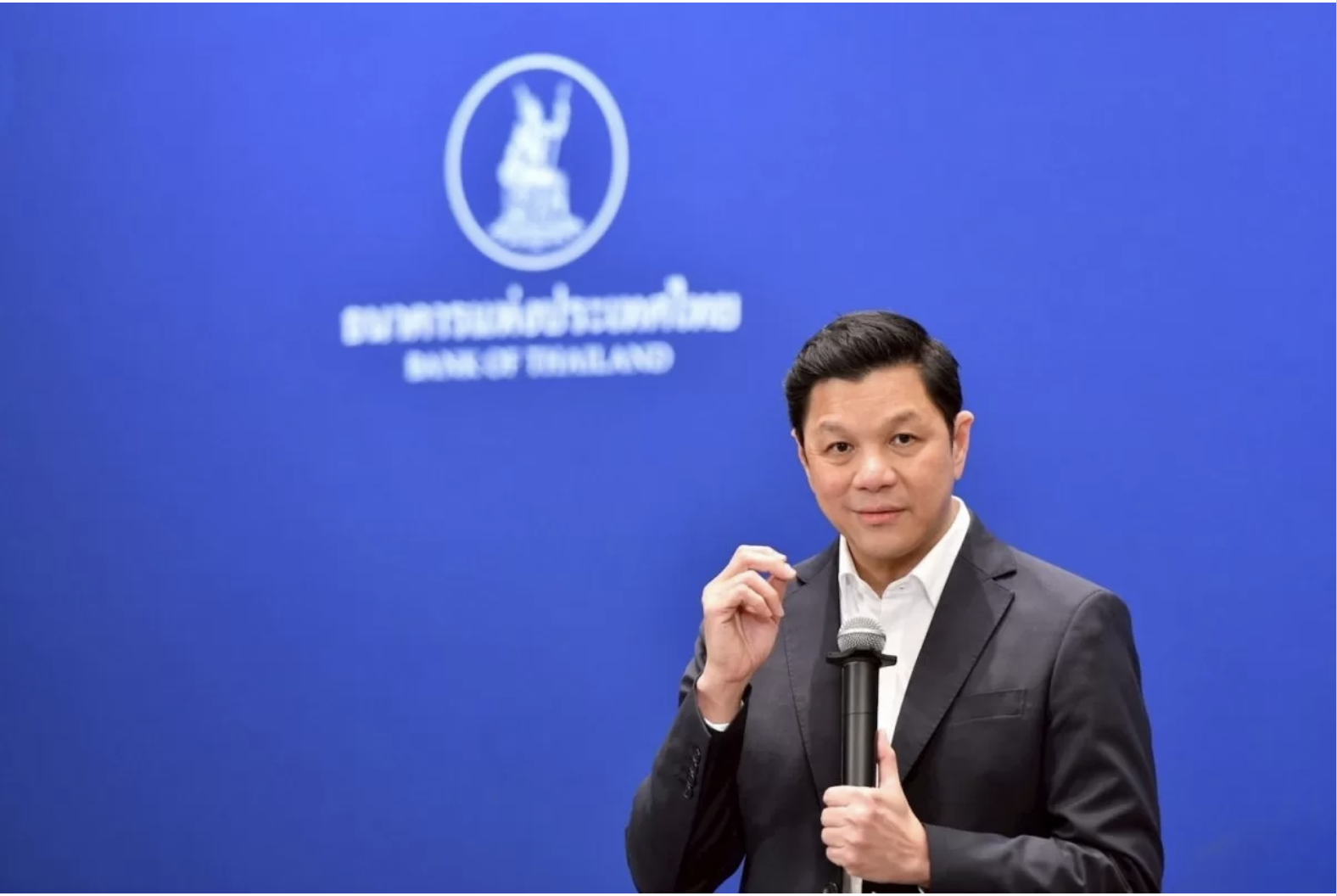
Bank of Thailand Governor Vitai Ratanakorn stated on Saturday that a weaker baht would be advantageous for the country’s economy and indicated that there is potential to lower interest rates if necessary to support growth.
The baht has appreciated approximately 6% against the US dollar so far this year, making it the second-best performing currency in Asia. Its strength, however, has threatened exports and tourism sectors.
“The central bank aims for the baht to weaken to an appropriate level that accurately reflects our economic conditions,” Mr. Vitai told reporters in Chiang Mai, without specifying a target level.
He added, “I believe the baht can weaken further,” noting that its current strength has been partly driven by a weaker dollar and Thailand’s current account surplus.
In September, the baht reached a four-year high, partly due to its close linkage with gold prices.
Looking ahead, Mr. Vitai projected that the ‘baht situation should improve next year,’ as the current account surplus is expected to decline.
He also emphasized that there is room to reduce interest rates further if needed. “We are reviewing the data. There is potential for another rate cut,” he said.
Thailand’s headline inflation has been negative for seven consecutive months, with policymakers attributing the decline to supply-side factors rather than tepid demand. The Monetary Policy Committee kept the key rate steady at 1.50% on October 8, after four cuts over the past year. The upcoming rate decision is scheduled for December 17, with some economists anticipating an additional reduction.
The Thai economy faces multiple challenges, including US tariffs, high household debt, and the appreciation of the baht. During the third quarter, economic growth slowed to just 1.2% annually—the slowest in four years—and contracted by 0.6% compared to the previous quarter.
The Bank of Thailand forecasts this year’s GDP growth at 2.2% and 1.6% for 2026, down from 2.5% in the previous year.
In response to the currency’s unusual strength amid economic difficulties, the government, led by Prime Minister Anutin Charnvirakul, has established a “Connect the Dots” task force to investigate irregular financial flows, including “grey money” transactions, online gambling, and scam-related fund movements.
The Bank of Thailand has also indicated readiness to deploy its policy tools if currency speculators cause distortions, though Mr. Vitai cautioned that the central bank can only influence currency volatility, not completely reverse exchange-rate trends.