

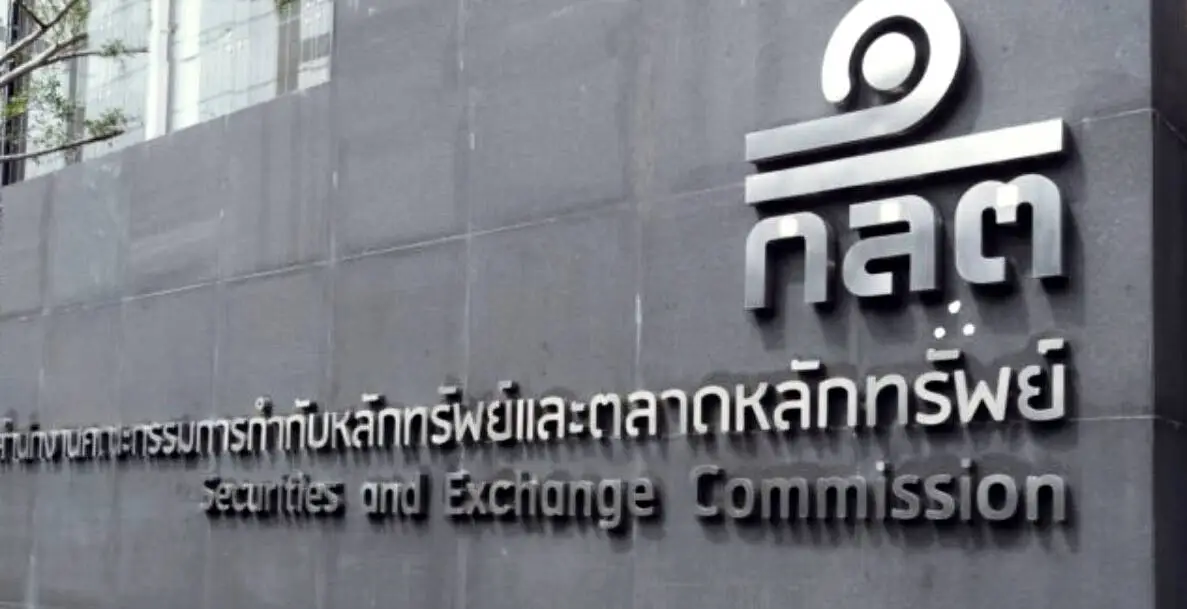
The Securities and Exchange Commission (SEC) of Thailand is intensifying its enforcement efforts and expanding proactive measures to prevent the country’s capital market and digital asset ecosystem from becoming avenues for money laundering and technology-based crimes.
In collaboration with both domestic and international agencies, the SEC is working to close security gaps and dismantle scam networks, especially as financial crime risks increase, according to a recent statement from the regulator.
The investigation process into suspicious transactions is accelerating, aided by enhanced data sharing with the Anti-Money Laundering Office (Amlo) and law enforcement agencies under the “connecting the dots” initiative. This effort aims to strengthen cross-agency surveillance and address systemic vulnerabilities.
All licensed market participants are now required to adhere strictly to anti-money laundering protocols, including know-your-customer (KYC), customer due diligence (CDD), and mandatory reporting of suspicious activities. The SEC warned that penalties for non-compliance could include sanctions for failure to report securities transactions, as well as violations related to tender offers or shareholder disclosures.
In the digital asset sector, the SEC has tightened standards to mirror those applied to commercial banks. Cryptocurrency exchanges and intermediaries are restricted from opening accounts associated with blacklisted mule accounts and must perform enhanced CDD on high-risk clients. They are also expected to categorize customers based on their risk profiles.
Alongside Amlo, the SEC is advancing toward full implementation of the global travel rule, aiming to trace digital transactions across borders. These combined measures have already resulted in the blocking of 44,382 mule accounts, preventing illicit activities valued at over 200 million baht.
The SEC emphasizes proactive protection to minimize public losses from investment scams. It has partnered with online platforms to swiftly shut down fraudulent investment channels, achieving a 100% takedown rate within 7 to 48 hours. In the first ten months of this year, the regulator has closed down 3,134 scam-related accounts and URLs, with a surge in public inquiries indicating increased vigilance.
The agency is also collaborating with the Ministry of Digital Economy and Society to block unauthorized foreign digital asset platforms often used for laundering purposes.
These initiatives are part of the SEC’s “Preventive Anti-Scam for All” strategy, which involves consultation, communication, and cooperation. The program offers pre-transaction advisory services, consolidates information on investment fraud into a centralized knowledge hub, and promotes the nationwide “Think Before You Transfer” campaign.
Furthermore, the SEC is working to enhance cooperation with domestic and international partners to remove fake business pages and strengthen identity verification standards across major digital platforms. To bolster regulatory oversight, the SEC has signed a cybercrime prevention memorandum of understanding with 15 public and private organizations and is involved in a national subcommittee responsible for integrating financial data under the connecting-the-dots framework.
The SEC has reiterated its commitment to deploying all available legal and preventive tools to safeguard Thailand’s capital markets and digital asset systems, aiming to increase transparency, close vulnerabilities, and bolster investor confidence.